


Dog Licking Paws Constantly
- Why Dogs Lick Their Paws
- Environmental Allergies and Paw Licking
- Food Allergies and Food Sensitivities
- Yeast Infections Between the Toes
- Injuries and Foreign Objects in the Paw
- Fleas and Parasites That Affect the Paws
- Anxiety and Boredom Related Paw Licking
- Redness Hair Loss and Swollen Paws
- How Veterinarians Diagnose the Cause of Paw Licking
- Treatment Options for Dogs That Lick Their Paws
- When to Take Your Dog to the Vet
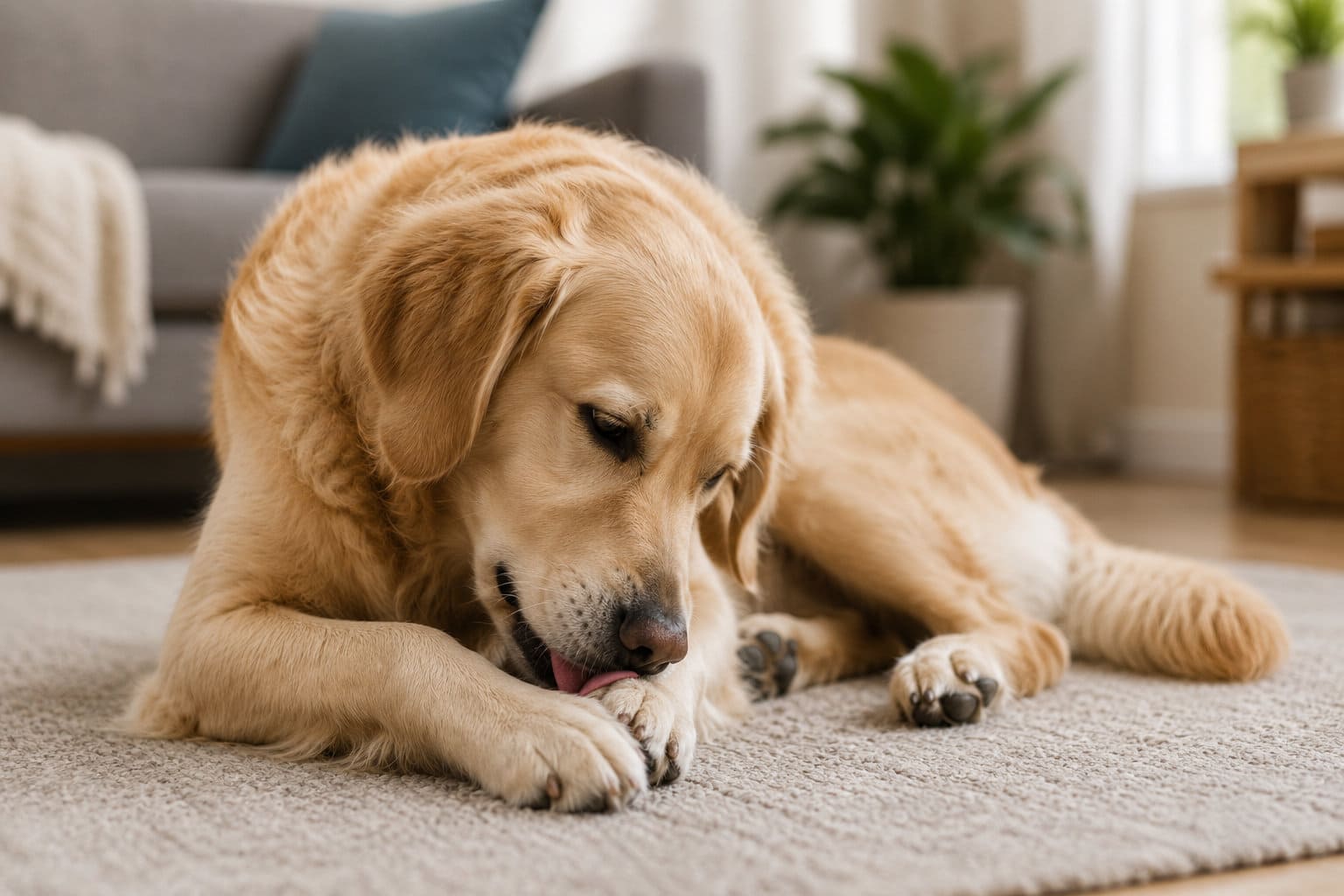
Many dogs lick their paws from time to time, especially after going outside or cleaning themselves. However, when paw licking becomes constant, it is often a sign that something is wrong. Pet owners frequently search for terms like “dog licking paws constantly,” “why is my dog chewing paws,” “red paws on dogs,” and “dog paw allergy treatment” because they are concerned about ongoing licking, chewing, and irritation.
Constant paw licking is one of the most common signs of allergies, skin irritation, infections, parasites, injuries, or pain. Some dogs lick one paw repeatedly, while others chew all four paws. Over time, this behavior can lead to redness, hair loss, swelling, sores, bleeding, and infection.
Dogs may also lick their paws because of boredom, stress, or anxiety. In some cases, what begins as a mild irritation becomes a repetitive habit that is difficult to stop.
Understanding why dogs lick their paws and knowing when to seek veterinary care can help prevent more serious skin problems and keep your dog comfortable.
Why Dogs Lick Their Paws
Paw licking is a normal grooming behavior in small amounts, but excessive licking is usually a symptom of an underlying issue. Dogs often lick their paws because they are itchy, painful, irritated, or inflamed.
The most common reasons dogs lick their paws include:
- Environmental allergies
- Food allergies
- Dry skin
- Fleas
- Mites
- Cuts or injuries
- Grass or pollen irritation
- Anxiety or boredom
Dogs may lick between the toes, around the paw pads, or on the top of the foot. Some dogs chew so much that the fur turns brown or red because of saliva staining.
Excessive licking can make the problem worse because the skin becomes more irritated each time the dog chews or licks the area.
“Constant paw licking is usually a sign of discomfort, irritation, or itching rather than a simple grooming habit.”
If the licking happens every day or keeps the dog awake at night, it is often time to investigate the cause.
Environmental Allergies and Paw Licking
Environmental allergies are one of the most common reasons dogs lick their paws constantly. Dogs can react to pollen, grass, weeds, mold, dust mites, or other allergens in the environment.
When dogs walk outside, allergens collect on the paws and between the toes. This can make the paws itchy and inflamed. Many dogs begin licking after coming in from the yard or after long walks.
Dogs with environmental allergies often have other symptoms as well, including:
- Ear infections
- Face rubbing
- Belly itching
- Red skin
- Watery eyes
- Sneezing
- Paw chewing
- Seasonal itching
Paw licking from allergies is often worse during spring and fall when pollen levels are high. However, dogs that are allergic to dust mites or mold may have symptoms year-round.
Pet owners frequently search for “dog licking paws after walking,” “dog grass allergy,” and “why are my dog’s paws red” because environmental allergies often cause redness and irritation around the feet.
Food Allergies and Food Sensitivities
Food allergies can also cause dogs to lick their paws all the time. Unlike environmental allergies, food-related symptoms usually happen throughout the year rather than only during certain seasons.
Dogs may react to common ingredients such as:
- Chicken
- Beef
- Dairy
- Wheat
- Soy
- Eggs
Food allergies often cause itching around the paws, ears, face, and belly. Many dogs also have digestive symptoms such as diarrhea, vomiting, gas, or soft stool.
Common signs of food allergies include:
- Chronic ear infections
- Paw licking
- Belly redness
- Vomiting
- Diarrhea
- Face rubbing
- Itching year-round
- Hair loss
A veterinarian may recommend an elimination diet to determine whether food is contributing to the problem. This usually involves feeding a prescription or limited ingredient diet for several weeks.
“Dogs with food allergies often lick the paws year-round instead of only during certain seasons.”
If the paw licking does not improve with allergy medication or seasonal treatment, food allergies may be worth discussing with a veterinarian.
Yeast Infections Between the Toes
Yeast infections are another common reason dogs lick and chew their paws. Warm, moist areas between the toes create the perfect environment for yeast to grow.
Dogs with yeast infections often have:
- Red skin between the toes
- Brown saliva staining
- Greasy skin
- Bad smell
- Thickened skin
- Swelling around the toes
- Constant licking
- Dark discoloration
The paws may smell unusual, sometimes with a strong musty or corn chip-like odor. Dogs with chronic allergies are more likely to develop yeast infections because the skin is already irritated.
Some dogs lick so much that the fur around the paws becomes stained red or brown. This staining is especially noticeable in dogs with white or light-colored fur.
Yeast infections often require veterinary treatment because the infection usually will not clear up without medication.
Injuries and Foreign Objects in the Paw
Dogs sometimes lick a paw constantly because there is an injury or something stuck inside the foot. Small cuts, splinters, thorns, burrs, broken nails, or burns from hot pavement can all make a dog focus on one paw.
Signs that an injury may be causing the licking include:
- Licking only one paw
- Limping
- Swelling
- Bleeding
- Broken toenail
- Sensitivity when touched
- Holding the paw up
- Crying or whining
In winter, salt and ice-melting chemicals on sidewalks can also irritate the paw pads. During summer, hot pavement may burn the feet and cause redness or blistering.
Pet owners often search for “dog licking one paw only,” “something stuck in dog paw,” and “dog paw injury” when symptoms appear suddenly.
If a dog is limping or the paw looks swollen, veterinary care may be necessary to remove the object or treat the injury.
Fleas and Parasites That Affect the Paws
Parasites can also make dogs lick and chew their paws. Fleas, mites, and other parasites often cause itching that spreads to different parts of the body, including the feet.
Dogs with fleas may scratch around the tail, belly, and back legs, while dogs with mites may have more widespread skin irritation.
Common signs of parasite-related itching include:
- Constant scratching
- Hair loss
- Scabs
- Red skin
- Ear irritation
- Paw chewing
- Biting at the skin
- Restlessness
Flea allergy dermatitis can be especially severe. Even one flea bite may trigger intense itching in sensitive dogs.
Some mites, such as mange mites, can also affect the paws and cause crusting, redness, and hair loss.
Using year-round flea and parasite prevention is one of the best ways to reduce the risk of paw irritation linked to parasites.
Anxiety and Boredom Related Paw Licking
Not all paw licking is caused by a physical problem. Some dogs lick their paws because they are anxious, bored, or stressed.
Dogs may be more likely to lick their paws if:
- They are left alone for long periods
- They do not get enough exercise
- There are changes in the home
- They are anxious during storms
- They are bored
- They have separation anxiety
Behavioral paw licking often starts during quiet times, such as late at night or when the dog is alone. Some dogs focus on one paw, while others lick both front paws repeatedly.
Over time, the licking can become a habit even if the original trigger is gone. Dogs may create sores, hair loss, or skin thickening because they keep licking the same area.
“Anxiety-related paw licking often becomes worse during stressful situations or when the dog is bored.”
More exercise, training, enrichment toys, and behavior support may help reduce stress-related licking.
Redness Hair Loss and Swollen Paws
When dogs lick their paws too much, the skin can become badly irritated. Redness, hair loss, swelling, and sores are common once the licking becomes chronic.
Signs of severe paw irritation include:
- Bright red skin
- Hair loss
- Swollen toes
- Bleeding
- Open sores
- Bad odor
- Cracked paw pads
- Thickened skin
Some dogs develop bacterial or yeast infections because the constant moisture damages the skin barrier. The more they lick, the worse the infection becomes.
Dogs with severe irritation may limp or avoid walking because the paws are painful.
If the paws are swollen, bleeding, or infected, veterinary treatment is usually needed.
How Veterinarians Diagnose the Cause of Paw Licking
Because there are many possible reasons dogs lick their paws, a veterinarian may need to perform testing to identify the exact cause.
Diagnostic testing may include:
- Skin scraping
- Allergy testing
- Ear exam
- Cytology for yeast or bacteria
- Flea comb exam
- Blood work
- Food elimination trial
- Paw examination for injuries
Some dogs have more than one problem at the same time. For example, a dog may have allergies that lead to a yeast infection between the toes.
A thorough exam is important because treatment depends on identifying the root cause rather than only stopping the licking.
“The best treatment for paw licking depends on finding out why the dog is licking in the first place.”
Dogs with recurring paw problems may need long-term allergy management, diet changes, or medication.
Treatment Options for Dogs That Lick Their Paws
Treatment depends on the cause of the paw licking. Dogs with allergies may need medication, while dogs with infections often need antibiotics or antifungal treatment.
Common treatment options include:
- Allergy medication
- Flea prevention
- Antibiotics
- Antifungal medication
- Medicated paw soaks
- Cone collar
- Prescription diet
- Omega-3 supplements
Dogs with environmental allergies may benefit from wiping the paws after walks to remove pollen and dirt. Some dogs need medicated shampoos or regular bathing to reduce allergens on the skin.
Dogs with anxiety-related licking may improve with more exercise, mental stimulation, calming supplements, or behavioral therapy.
Owners should avoid using human creams or medication on the paws unless instructed by a veterinarian.
When to Take Your Dog to the Vet
Occasional licking may not always be serious, but constant paw licking should not be ignored.
You should schedule a veterinary appointment if your dog has:
- Constant paw licking
- Swollen paws
- Redness
- Bleeding
- Hair loss
- Limping
- Bad odor
- Open sores
- Ear infections
- Ongoing itching
A dog that suddenly starts licking one paw intensely may have an injury or something stuck in the foot. Dogs that lick all four paws are more likely to have allergies or skin disease.
“The sooner the cause of paw licking is treated, the easier it is to prevent infection and long-term skin damage.”
If your dog is licking the paws every day, chewing the feet, or showing signs of redness and swelling, it may be time to schedule a veterinary exam and discuss treatment options.