


Hot Spots on Dogs
- Hot Spots on Dogs What Causes Them and How to Treat Them
- What Hot Spots Look Like on Dogs
- Common Causes of Hot Spots in Dogs
- Fleas and Allergies as Major Triggers
- Dog Breeds That Are More Prone to Hot Spots
- Where Hot Spots Commonly Appear
- Signs That a Hot Spot Is Infected
- How Veterinarians Diagnose Hot Spots
- Treatment Options for Hot Spots on Dogs
- Home Care for Mild Hot Spots
- How to Prevent Hot Spots in Dogs
- When to Take Your Dog to the Vet for a Hot Spot
- Final Thoughts on Hot Spots in Dogs

Hot spots are one of the most common skin problems in dogs and can appear suddenly, often becoming severe within just a few hours. Many pet owners search for terms like “hot spots on dogs,” “dog skin sores,” “red wet spot on dog skin,” and “how to treat hot spots on dogs” because they are alarmed when they notice a painful, inflamed area on their dog’s body.
A hot spot is a red, irritated, moist area of skin that develops when a dog repeatedly licks, scratches, chews, or bites the same location. These sores can become very painful and may spread quickly if they are not treated.
Hot spots are also known as acute moist dermatitis. They can occur anywhere on the body but are most common around the ears, neck, face, chest, hips, and tail area. Some dogs develop a single hot spot, while others may experience repeated flare-ups because of underlying allergies, fleas, skin infections, or other medical conditions.
Understanding what causes hot spots, how they look, and when veterinary treatment is necessary can help pet owners act quickly and prevent the problem from becoming worse.
What Hot Spots Look Like on Dogs
Hot spots often start as a small irritated area of skin, but they can become much larger in a short amount of time. Many pet owners first notice that their dog is licking or chewing the same spot repeatedly.
As the irritation becomes worse, the skin may become:
- Red
- Wet
- Oozing
- Swollen
- Painful
- Hairless
- Crusted
- Warm to the touch
Some hot spots produce a bad smell because of infection. Others may have yellow discharge, scabs, or matted fur around the affected area.
The skin is often extremely sensitive, and some dogs cry, pull away, or become aggressive if the hot spot is touched.
“Hot spots can spread very quickly because the more a dog licks and scratches, the more irritated the skin becomes.”
Because they can worsen within hours, hot spots should not be ignored.
Common Causes of Hot Spots in Dogs
Hot spots are usually not the main problem by themselves. In most cases, they develop because something else caused the dog to start scratching, licking, or biting the skin.
The most common causes of hot spots include:
- Fleas
- Environmental allergies
- Food allergies
- Ear infections
- Dry skin
- Matted fur
- Skin infections
- Anxiety or boredom
Dogs with allergies often develop repeated hot spots because they are already itchy. Flea bites are another major trigger, especially in dogs with flea allergy dermatitis.
Moisture trapped in the coat after swimming, bathing, or rainy weather can also increase the risk. Thick-coated breeds are especially prone to hot spots because moisture can stay trapped close to the skin.
Dogs may also create hot spots when they are anxious, bored, or experiencing pain in another part of the body.
Fleas and Allergies as Major Triggers
Fleas and allergies are two of the biggest reasons dogs develop hot spots. A dog with flea allergy dermatitis may react strongly to even one flea bite.
The itching often becomes severe around the lower back, tail base, belly, and thighs. Dogs may chew at these areas so aggressively that they create large sores.
Environmental allergies caused by pollen, grass, dust, mold, or weeds can also lead to hot spots. Dogs with allergies often lick the paws, scratch the ears, and rub the face.
Common signs that allergies may be causing hot spots include:
- Paw licking
- Ear infections
- Belly redness
- Seasonal itching
- Hair loss
- Repeated skin infections
- Face rubbing
- Chronic scratching
Food allergies can also cause ongoing skin irritation. Dogs with food sensitivities may develop hot spots around the ears, neck, paws, or stomach.
“Many dogs with recurring hot spots actually have an untreated allergy problem underneath.”
If the allergy is not treated, the hot spots may keep coming back even after the skin heals.
Dog Breeds That Are More Prone to Hot Spots
Some dog breeds are naturally more likely to develop hot spots because of their coat type, skin folds, or tendency toward allergies.
Breeds that are often more prone to hot spots include:
- Golden Retrievers
- Labrador Retrievers
- German Shepherds
- Saint Bernards
- Bulldogs
- Cocker Spaniels
- Rottweilers
- Huskies
Dogs with thick fur or double coats are at higher risk because moisture can become trapped against the skin. Long-haired breeds may also develop hot spots if the fur becomes matted.
Breeds with floppy ears may get hot spots around the ears because of chronic ear infections or trapped moisture.
Dogs with allergies are especially likely to experience repeated hot spots regardless of breed.
Where Hot Spots Commonly Appear
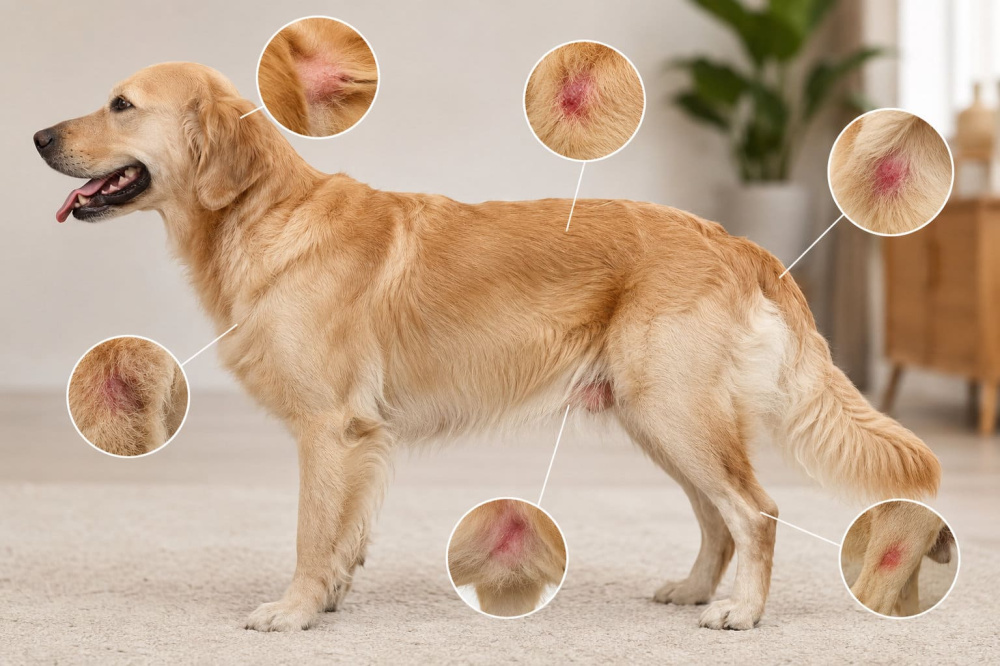
Hot spots can occur almost anywhere on the body, but some locations are more common than others.
The most frequent areas include:
- Around the ears
- Neck
- Face
- Under the collar
- Chest
- Hips
- Tail base
- Back legs
Hot spots near the ears are often linked to ear infections. Dogs may scratch the ear so much that the surrounding skin becomes inflamed and infected.
Hot spots near the tail are often caused by fleas or flea allergy dermatitis. Dogs with hip pain or arthritis may chew near the hips or thighs because of discomfort.
Some dogs also develop hot spots under collars or harnesses if moisture, friction, or trapped dirt irritates the skin.
Pet owners often search for “hot spot near dog ear,” “dog licking tail base,” and “red sore on dog neck” because these are some of the most common places where hot spots appear.
Signs That a Hot Spot Is Infected
Hot spots are often already infected by the time owners notice them. Constant licking and scratching damage the skin, allowing bacteria to grow.
Signs of infection may include:
- Yellow or green discharge
- Bad odor
- Swelling
- Pain when touched
- Crusting
- Bleeding
- Fever
- Lethargy
Some infected hot spots become very large and may spread quickly to surrounding skin. Dogs may stop eating, become restless, or seem uncomfortable because of the pain.
If the hot spot has discharge, a strong smell, or continues getting larger, veterinary treatment is usually necessary.
“An infected hot spot can become painful very quickly and often requires medication to heal properly.”
Ignoring the infection can make the condition much worse and may increase the risk of deeper skin damage.
How Veterinarians Diagnose Hot Spots
A veterinarian can usually diagnose a hot spot during a physical exam. However, because hot spots are often caused by another underlying issue, the veterinarian may also recommend testing to determine why the dog is itching.
Diagnostic testing may include:
- Skin scraping
- Flea comb exam
- Allergy testing
- Ear exam
- Skin cytology
- Blood work
- Food trial
- Culture for infection
Skin cytology is often used to look for bacteria or yeast. Ear exams may be recommended if the hot spot is near the ears.
Dogs with repeated hot spots may need allergy testing or a food elimination trial to determine if allergies are contributing to the problem.
Finding the underlying cause is important because treating only the hot spot without addressing the reason for the itching often leads to future flare-ups.
Treatment Options for Hot Spots on Dogs
Treatment for hot spots depends on how severe the skin irritation has become. Mild hot spots may improve with clipping the fur, cleaning the area, and preventing the dog from licking.
More severe hot spots often require:
- Shaving the fur around the lesion
- Cleaning the skin
- Antibiotics
- Anti-itch medication
- Steroid medication
- Flea treatment
- Cone collar
- Medicated shampoo
Clipping the fur helps air reach the skin and makes it easier to clean the area. Dogs usually need to wear an Elizabethan collar or recovery cone so they cannot continue licking the wound.
Some hot spots heal quickly once the dog stops irritating the skin. Others may take longer if the infection is severe or the underlying allergy is still active.
Pet owners should avoid using human creams or medications unless directed by a veterinarian because some products can be unsafe for dogs.
Home Care for Mild Hot Spots
Some mild hot spots can be managed at home if they are caught very early and are not severely infected.
Basic home care may include:
- Trimming fur around the area
- Cleaning gently with a vet-approved solution
- Keeping the skin dry
- Preventing licking
- Washing bedding
- Using flea prevention
However, home care is usually not enough if the hot spot is large, bleeding, smells bad, or continues spreading.
Owners should never bandage a hot spot tightly because moisture trapped under the bandage can make the condition worse.
“Keeping the area dry and preventing licking are two of the most important steps in helping a hot spot heal.”
If there is no improvement within a day or two, veterinary treatment is recommended.
How to Prevent Hot Spots in Dogs
Preventing hot spots often means controlling the underlying causes of itching and irritation.
The best ways to prevent hot spots include:
- Keeping up with flea prevention
- Treating allergies early
- Drying the coat after swimming
- Brushing regularly
- Preventing matting
- Cleaning the ears
- Using medicated shampoos if needed
- Scheduling regular vet exams
Dogs with long hair or thick coats may need more frequent grooming to prevent moisture and matting.
Dogs with allergies often benefit from long-term treatment because controlling the itching makes hot spots less likely.
Regular veterinary care can also help detect ear infections, skin problems, or parasites before they become severe.
When to Take Your Dog to the Vet for a Hot Spot
Hot spots should be evaluated by a veterinarian if they are large, painful, infected, or spreading quickly.
You should contact a veterinarian if your dog has:
- A hot spot larger than a few inches
- Severe redness
- Bleeding
- Bad smell
- Yellow discharge
- Swelling
- Fever
- Ongoing licking and scratching
Dogs that keep developing hot spots may need more extensive testing to look for allergies, chronic infections, or other skin diseases.
Pet owners often search for “dog hot spot treatment near me,” “vet for dog skin infection Queens,” and “why does my dog keep getting hot spots” because repeated flare-ups are common when the underlying cause is not treated.
“The sooner a hot spot is treated, the faster it can heal and the less likely it is to spread.”
Early treatment often prevents pain, infection, and more serious skin damage.
Final Thoughts on Hot Spots in Dogs
Hot spots are painful skin sores that can appear suddenly and become worse very quickly. They are usually caused by allergies, fleas, skin irritation, ear infections, moisture, or repeated licking and chewing.
Although mild hot spots may improve with early care, larger or infected sores often require veterinary treatment. Identifying the reason behind the itching is important because many dogs continue to get hot spots until the underlying cause is treated.
If your dog has a red, wet, painful sore or is constantly licking and chewing the skin, it may be time to schedule a veterinary appointment. Working with a trusted veterinary clinic in Queens or NYC can help determine the cause of the hot spot and create a treatment plan that keeps your dog comfortable and healthy.