


Bloat GDV in Dogs
- Bloat Is One of the Most Dangerous Emergencies in Dogs
- Why Bloat Progresses So Quickly
- Dogs at Higher Risk for Bloat
- Early Warning Signs That Should Never Be Ignored
- Advanced Symptoms Indicating Life-Threatening GDV
- Why Home Treatment Is Never Safe for Bloat
- How Veterinarians Diagnose Bloat and GDV
- Emergency Treatment and Stabilization
- Recovery and Post-Surgical Care
- Preventing Bloat in High-Risk Dogs
- Long-Term Outlook After GDV
- When to Seek Emergency Veterinary Care
Bloat Is One of the Most Dangerous Emergencies in Dogs
Bloat, medically known as gastric dilatation-volvulus, is one of the most life-threatening conditions seen in dogs. It develops rapidly and can become fatal within hours if not treated immediately. Every dog owner should understand how serious this condition is.
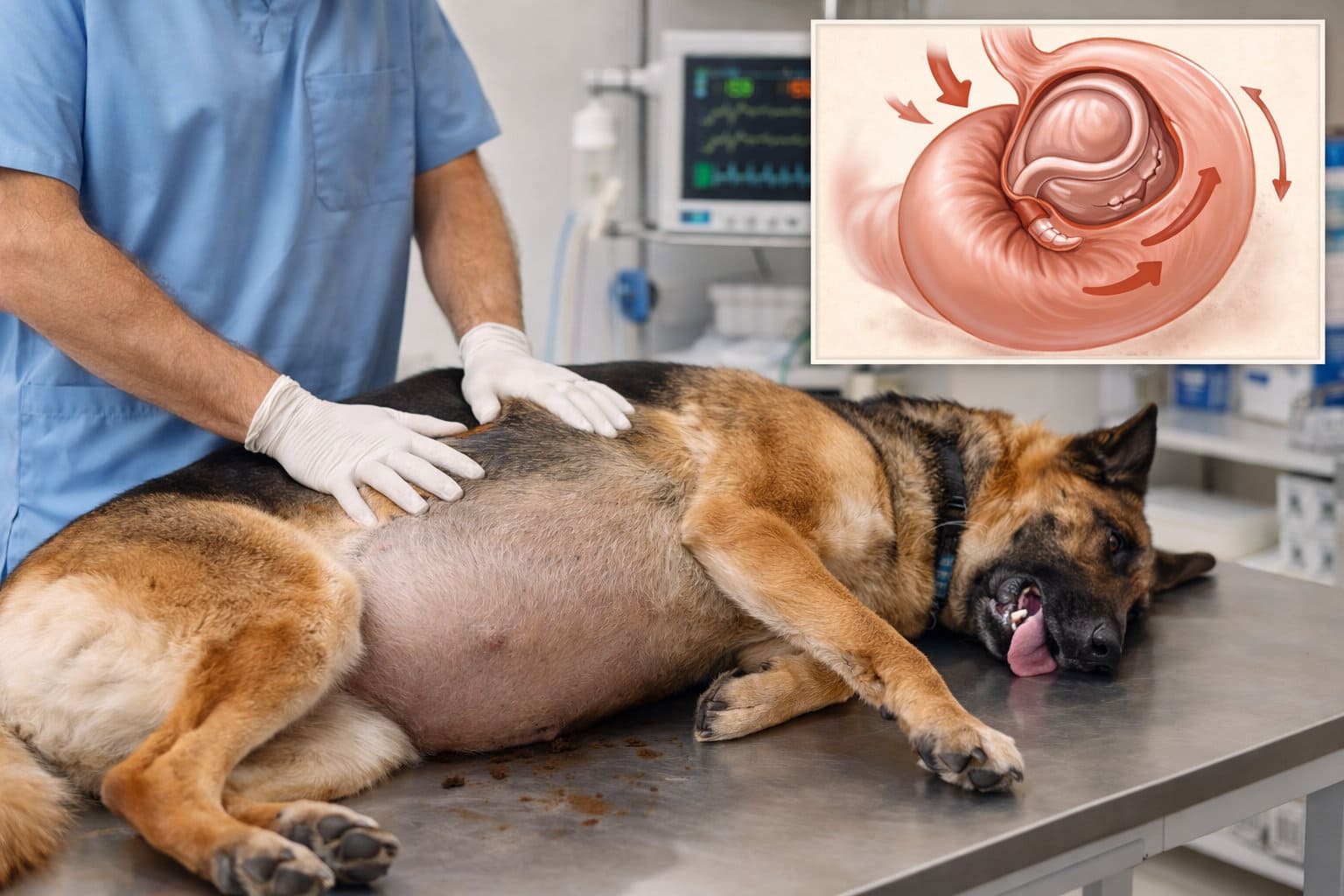
Bloat occurs when the stomach fills with gas, food, or fluid and becomes dangerously enlarged. In severe cases, the stomach twists on itself, cutting off blood supply and trapping contents inside. This twisting is what makes GDV especially deadly.
Dogs experiencing bloat deteriorate quickly. What begins as mild discomfort can progress to shock, organ failure, and collapse in a very short time.
“Bloat is a true veterinary emergency where minutes matter.”
Why Bloat Progresses So Quickly
The stomach plays a central role in circulation and digestion. When it becomes distended, it presses against major blood vessels, reducing blood flow back to the heart. This leads to rapid cardiovascular compromise.
When the stomach twists, blood supply to the stomach and spleen may be cut off entirely. Toxins build up, heart rhythm becomes unstable, and shock develops.
Even dogs that appear alert initially can decline suddenly. This unpredictability is what makes GDV so dangerous.
Immediate veterinary intervention is the only chance for survival.
Dogs at Higher Risk for Bloat
While any dog can develop bloat, certain breeds and body types are at significantly higher risk. Large and giant breed dogs with deep chests are most commonly affected.
Age also plays a role. Middle-aged and older dogs are at higher risk, especially if they have experienced bloat previously.
Genetics, feeding habits, and stress levels all contribute to risk. Understanding these factors helps owners recognize danger sooner.
Knowing your dog’s risk profile can save their life.
Unnumbered list:
- Large or giant breeds
- Deep-chested body structure
- Family history of bloat
Early Warning Signs That Should Never Be Ignored
The earliest signs of bloat are often subtle and easy to miss. Dogs may appear restless, pace, or seem unable to get comfortable.
Non-productive retching is a hallmark sign. Dogs may try to vomit repeatedly without bringing anything up. This symptom alone should trigger immediate concern.
The abdomen may become visibly enlarged or tight. Some dogs show pain when the belly is touched.
“Retching without vomiting is a classic red flag for GDV.”
Advanced Symptoms Indicating Life-Threatening GDV
As bloat progresses, symptoms become severe. Dogs may show rapid breathing, weakness, or collapse.
Pale gums, rapid heart rate, and cold extremities indicate shock. At this stage, survival depends on immediate emergency care.
Dogs with twisted stomachs cannot relieve pressure on their own. Waiting at home at this point is extremely dangerous.
Advanced GDV cases require emergency surgery and intensive care.
Why Home Treatment Is Never Safe for Bloat
Bloat cannot be treated at home. No amount of walking, massage, or waiting will resolve a twisted stomach.
Attempts to induce vomiting are ineffective and dangerous. The stomach contents are trapped and cannot be expelled.
Delaying veterinary care drastically reduces survival chances. Even short delays can mean the difference between recovery and loss.
Numbered list:
- Bloat cannot resolve on its own
- Home remedies are ineffective
- Emergency veterinary care is essential
How Veterinarians Diagnose Bloat and GDV
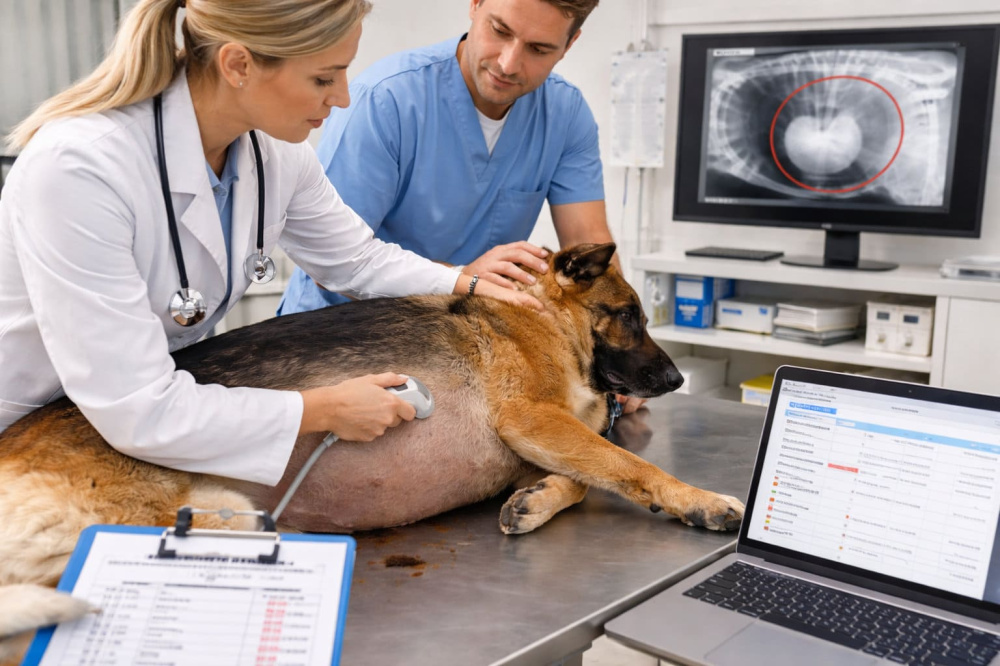
Diagnosis begins with physical examination and immediate assessment of the dog’s stability. Veterinarians evaluate abdominal size, pain response, heart rate, and breathing.
X-rays are the primary diagnostic tool for confirming stomach rotation. These images allow rapid distinction between simple bloat and GDV.
Blood tests help assess shock, organ function, and overall stability. Diagnosis and treatment often happen simultaneously due to urgency.
Queens emergency veterinary clinics are equipped to act quickly in these situations.
Emergency Treatment and Stabilization
Initial treatment focuses on stabilizing the dog. This includes intravenous fluids, oxygen support, and medications to manage pain and shock.
If the stomach is twisted, emergency surgery is required. The surgeon untwists the stomach and evaluates surrounding organs for damage.
In many cases, a procedure called gastropexy is performed to prevent recurrence. This permanently attaches the stomach to the abdominal wall.
Surgery is the only definitive treatment for GDV.
Recovery and Post-Surgical Care
Recovery from bloat surgery varies depending on severity and how quickly treatment began. Dogs treated early have significantly better outcomes.
Post-surgical care includes monitoring for heart rhythm abnormalities, infection, and gastrointestinal function. Hospitalization is often required.
Owners must follow strict feeding and activity guidelines during recovery. Close communication with the veterinary team is essential.
“Early treatment dramatically improves survival rates.”
Unnumbered list:
- Close monitoring after surgery
- Gradual return to feeding
- Follow-up veterinary visits
Preventing Bloat in High-Risk Dogs
Prevention strategies focus on reducing known risk factors. Feeding smaller, more frequent meals rather than one large meal is commonly recommended.
Avoiding intense exercise before and after meals reduces stomach movement and gas buildup. Stress management also plays a role in prevention.
For high-risk dogs, preventive gastropexy may be discussed with a veterinarian. This surgical option significantly reduces the risk of GDV.
Prevention is especially important for breeds predisposed to bloat.
Long-Term Outlook After GDV
Dogs that survive GDV and receive appropriate care can return to a good quality of life. Long-term outcomes depend on organ damage and response to treatment.
Recurrence risk is high without preventive measures. Dogs that do not receive gastropexy are more likely to experience bloat again.
Ongoing monitoring and lifestyle adjustments help reduce future risk.
Survival is possible with fast, decisive care.
When to Seek Emergency Veterinary Care
Any dog showing signs of bloat should be taken to an emergency veterinary clinic immediately. There is no safe waiting period.
Calling ahead while en route allows the clinic to prepare for immediate intervention. Time saved can directly impact survival.
The price of treatment varies depending on severity and required care, which is why rapid individual assessment is critical.
Pet owners are strongly urged to seek emergency veterinary care at the first suspicion of bloat. Quick action saves lives.
Your dog’s survival depends on awareness, urgency, and access to professional veterinary care.