


Blood in Dog’s Stool
- Blood in a Dog’s Stool Is a Symptom That Requires Attention
- Understanding the Difference Between Red and Black Blood
- Common Causes of Blood in Dog Stool
- Stress-Related Colitis and Bloody Stool
- Parasites and Infections Affecting the Intestines
- Dietary Causes and Food Sensitivities
- When Blood in Stool Indicates an Emergency
- Diagnostic Evaluation at a Veterinary Clinic
- Treatment Options Based on the Cause
- Preventing Future Episodes of Bloody Stool
- Monitoring Recovery and Long-Term Management
- Scheduling a Veterinary Appointment and Next Steps
Blood in a Dog’s Stool Is a Symptom That Requires Attention
Seeing blood in a dog’s stool is alarming for any pet owner and should never be ignored. Even a small amount of blood can indicate irritation, inflammation, or a more serious internal problem. While some causes are mild, others require immediate veterinary care.
Dogs cannot communicate internal discomfort clearly, so visible changes in stool are often one of the earliest warning signs. Blood may appear suddenly or gradually and can vary in color and consistency. Each variation provides important diagnostic clues.
In Queens, veterinary clinics frequently evaluate dogs for bloody stool because it can signal conditions ranging from dietary upset to life-threatening disease. Early assessment helps prevent complications.
“Blood in stool is never normal and always deserves evaluation.”
Understanding the Difference Between Red and Black Blood
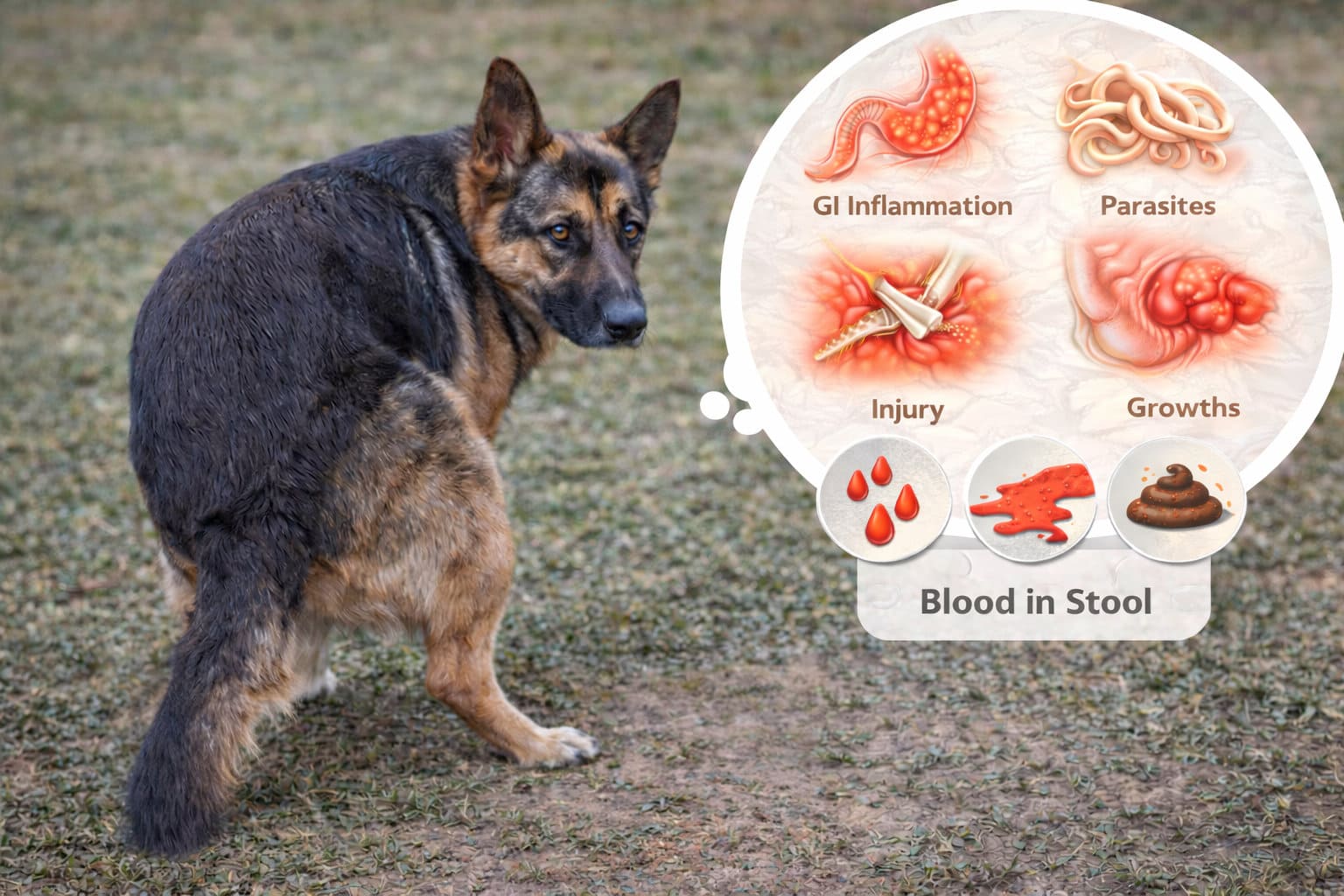
The color of blood in a dog’s stool helps indicate where bleeding may be occurring. Bright red blood usually suggests bleeding in the lower gastrointestinal tract, such as the colon or rectum.
Dark, tar-like stool indicates digested blood, meaning the bleeding is likely coming from the stomach or upper intestines. This type of bleeding is often more serious and requires urgent attention.
Sometimes blood appears mixed within the stool, while in other cases it coats the outside. Each presentation helps veterinarians narrow down potential causes.
Careful observation before a veterinary visit can be extremely helpful for diagnosis.
Common Causes of Blood in Dog Stool
There are many possible causes of bloody stool in dogs. Dietary indiscretion, such as eating garbage or unfamiliar foods, is one of the most common reasons seen in veterinary practice.
Parasites, bacterial infections, and viral illnesses can damage the intestinal lining and cause bleeding. Stress and sudden dietary changes can also trigger inflammation in the gut.
More serious causes include inflammatory bowel disease, tumors, or bleeding disorders. Identifying the cause early significantly improves treatment outcomes.
Treating the symptom without finding the cause often leads to recurrence.
Unnumbered list:
- Dietary indiscretion or food intolerance
- Intestinal parasites or infections
- Inflammatory or chronic gastrointestinal disease
Stress-Related Colitis and Bloody Stool
Stress can have a profound impact on a dog’s digestive system. Stress-induced colitis is a common cause of bright red blood in otherwise healthy dogs.
Events such as boarding, moving, loud environments, or changes in routine can trigger inflammation in the colon. Dogs may strain to defecate and produce small amounts of stool with mucus or blood.
This condition often appears suddenly and can resolve with proper treatment and stress management. However, repeated episodes require veterinary evaluation.
“Stress alone can cause significant intestinal inflammation in dogs.”
Parasites and Infections Affecting the Intestines
Intestinal parasites such as hookworms, whipworms, and roundworms can damage the intestinal lining and cause bleeding. Puppies and dogs without regular preventive care are especially vulnerable.
Bacterial infections may occur after ingesting contaminated food or water. These infections often cause diarrhea, lethargy, and appetite loss in addition to bloody stool.
Some infections are zoonotic, meaning they can affect humans as well. Prompt veterinary diagnosis protects both pets and households.
Regular fecal testing plays a critical role in prevention and early detection.
Dietary Causes and Food Sensitivities
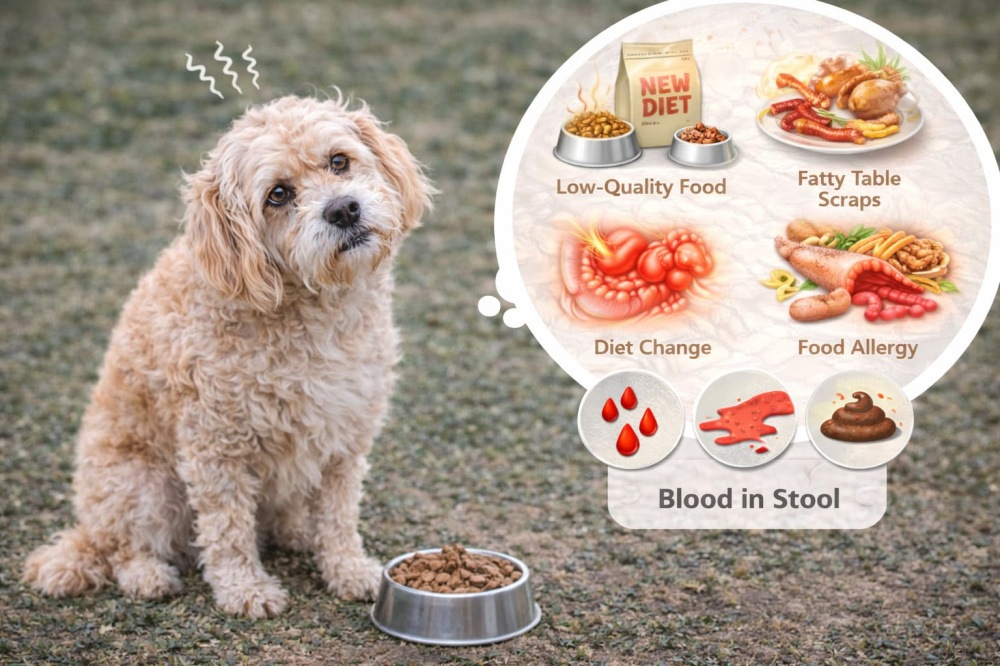
Sudden changes in diet can irritate a dog’s digestive system. Switching food too quickly or feeding rich table scraps often results in diarrhea and blood in the stool.
Some dogs develop food sensitivities or allergies that cause chronic inflammation. These cases often involve recurring digestive issues rather than a single episode.
Veterinary-guided dietary trials are often necessary to identify problematic ingredients. Guessing or frequent food changes can worsen symptoms.
Numbered list:
- Sudden food changes
- Ingestion of fatty or spoiled food
- Underlying food sensitivities
When Blood in Stool Indicates an Emergency
Certain signs indicate that bloody stool is a medical emergency. Large amounts of blood, black tarry stool, or rapid worsening of symptoms require immediate care.
Bloody stool combined with vomiting, weakness, fever, or collapse may indicate severe infection, toxin exposure, or internal bleeding. These situations can become life-threatening quickly.
Puppies, senior dogs, and dogs with chronic illnesses are especially at risk of rapid deterioration.
“Severe bleeding should never be monitored at home.”
Diagnostic Evaluation at a Veterinary Clinic
Veterinary diagnosis begins with a thorough physical examination and detailed medical history. Information about diet, recent changes, stress, and medications is essential.
Diagnostic testing often includes fecal analysis, blood work, and imaging. These tests help identify parasites, infections, inflammation, and internal abnormalities.
Accurate diagnosis prevents unnecessary treatments and allows targeted therapy. Early diagnostics often reduce overall treatment time and cost.
Queens veterinary clinics emphasize prompt evaluation to ensure patient safety.
Treatment Options Based on the Cause
Treatment depends entirely on the underlying cause of bleeding. Mild dietary issues may resolve with temporary diet changes and supportive care.
Infections and parasites require prescription medications. Inflammatory conditions may need long-term dietary management and medication.
Severe cases may require hospitalization, fluid therapy, or advanced diagnostics. Following the full treatment plan is essential for recovery.
Preventing Future Episodes of Bloody Stool
Prevention focuses on consistency and preventive care. Feeding a stable, high-quality diet reduces gastrointestinal irritation.
Routine parasite prevention and regular veterinary checkups help identify problems early. Avoiding access to garbage and unfamiliar foods also plays a major role.
Stress management is often overlooked but essential, especially for dogs prone to colitis.
Unnumbered list:
- Maintain a consistent diet
- Use regular parasite prevention
- Schedule routine veterinary exams
Monitoring Recovery and Long-Term Management
After treatment, monitoring stool quality is important. Recurrence of blood should be reported promptly to your veterinarian.
Some dogs require long-term management due to chronic gastrointestinal conditions. With proper care, most dogs maintain a good quality of life.
Owners should follow veterinary guidance closely and avoid unsupervised dietary or medication changes.
Long-term success depends on consistency and communication.
Scheduling a Veterinary Appointment and Next Steps
If you notice blood in your dog’s stool, scheduling a veterinary appointment promptly is the safest decision. Early evaluation prevents complications and unnecessary suffering.
During the visit, the veterinarian will discuss diagnostic findings, treatment options, and recovery expectations. The price of care depends on diagnostics and treatment needs, which is why individualized assessment is important.
Pet owners are encouraged to schedule an appointment as soon as blood is noticed, even if the dog otherwise seems normal. Early care is more effective and often less costly.
Your dog’s digestive health and overall wellbeing depend on timely veterinary attention and informed decisions.