


Can Dogs Eat Grapes or Raisins and What to Do Immediately in Queens NY
- Why This Question Matters for Dog Owners in Queens NY
- Are Grapes and Raisins Toxic to All Dogs
- What Happens If a Dog Eats Grapes
- How Much Is Too Much
- Symptoms of Grape and Raisin Toxicity in Dogs
- What To Do Immediately After Ingestion
- Diagnostic Tests and Monitoring
- Treatment Options for Dogs Who Ate Grapes
- Long Term Effects of Kidney Damage
- Why Prevention Is Critical in Urban Homes
- Safe Fruit Alternatives for Dogs
- When To Schedule a Veterinary Appointment
Why This Question Matters for Dog Owners in Queens NY
Many pet owners in Queens ask the same urgent question after a snack falls on the floor or a child shares food without thinking — can dogs eat grapes or raisins? The short and evidence-based answer is no. Grapes and raisins are considered highly toxic to dogs and can cause acute kidney failure even in small amounts. Because this reaction is unpredictable, every exposure should be treated seriously.
In a busy borough like Queens, where dogs live in apartments, townhouses, and family homes, grapes are common in kitchens year-round. They appear in fruit bowls, lunch boxes, baked goods, trail mix, and holiday dishes. This makes accidental ingestion more common than many people realize.
Veterinary professionals across New York emphasize that there is no safe amount. Some dogs become critically ill after eating just one or two grapes, while others may ingest more and show delayed symptoms. The mechanism of toxicity is still being studied, but the risk is well established.
“Even a single grape can be enough to trigger kidney damage in a susceptible dog. We never advise a wait-and-see approach.”
If your dog has eaten grapes or raisins, it is essential to contact a veterinary clinic in Queens immediately and consider emergency evaluation. Early intervention significantly improves outcomes.
Are Grapes and Raisins Toxic to All Dogs
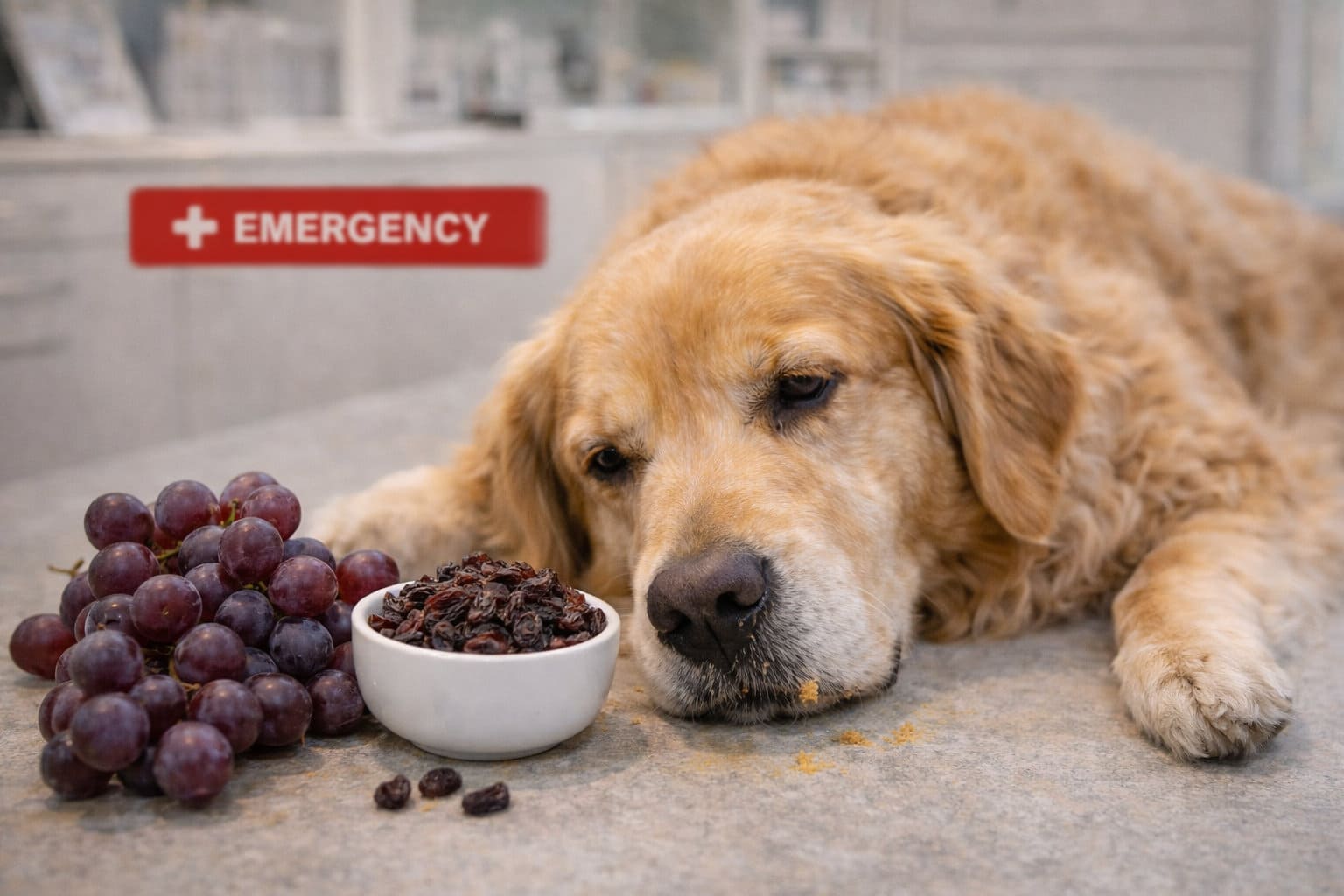
Yes, grapes and raisins are considered toxic to all dogs, regardless of breed, age, or size. Unlike chocolate toxicity, where dose and body weight can guide risk estimation, grape toxicity is unpredictable. There is no confirmed safe threshold.
Both fresh grapes and dried raisins are dangerous. In fact, raisins may be even more concentrated and potentially more toxic because they contain less water and higher density of the unknown toxic compound.
The following forms should all be treated as hazardous:
- Fresh grapes of any color including red, green, or seedless
- Raisins
- Sultanas and currants
- Foods containing raisins such as cookies, cakes, cereals, and bread
- Trail mix with dried fruit
It does not matter whether the fruit is organic, washed, peeled, or cooked. The toxic risk remains. Because the exact toxin has not been definitively isolated, veterinary guidelines recommend treating all exposures as medical emergencies.
What Happens If a Dog Eats Grapes
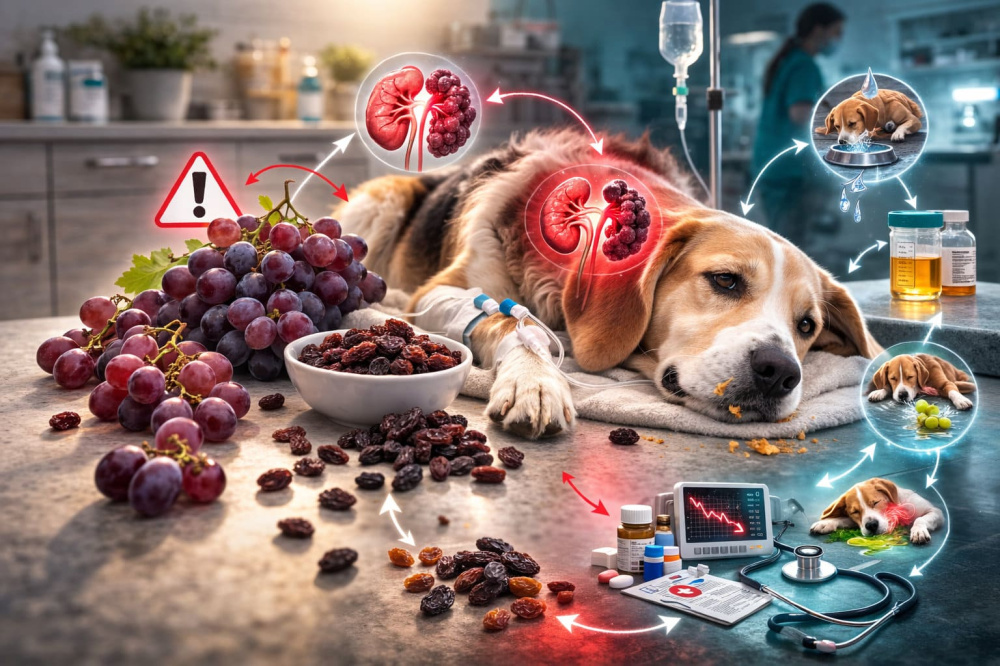
The most serious consequence of grape ingestion is acute kidney injury. The kidneys are responsible for filtering toxins from the bloodstream and maintaining fluid balance. When they fail, dangerous metabolic changes occur quickly.
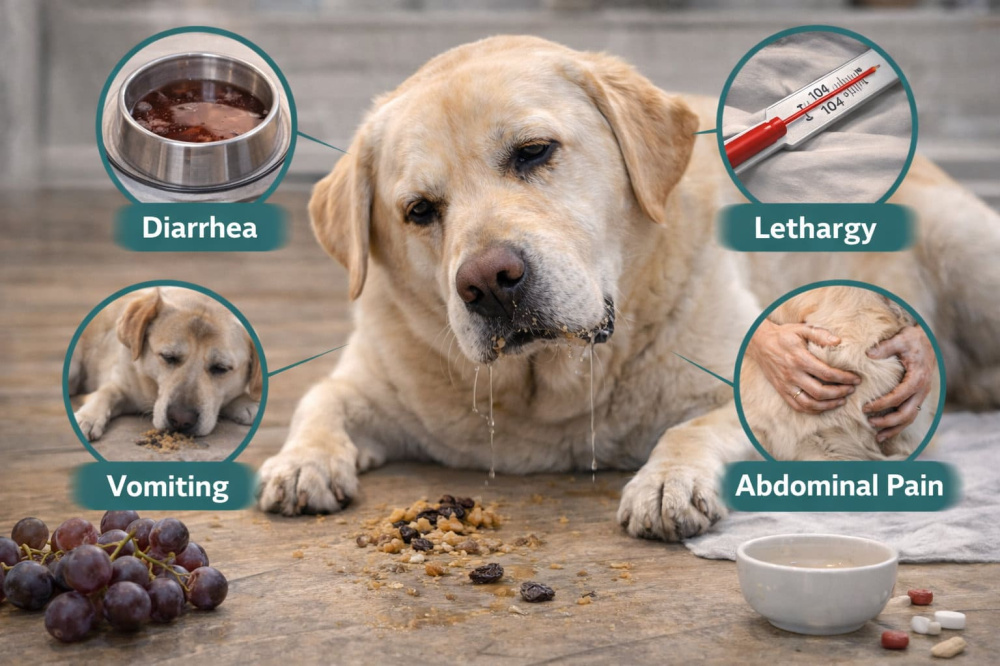
Early symptoms often appear within 6 to 12 hours and may include vomiting, lethargy, abdominal pain, and decreased appetite. As kidney damage progresses, dogs may produce less urine or stop urinating entirely, a life-threatening condition known as anuria.
In severe cases, dogs may develop dehydration, tremors, bad breath due to toxin buildup, and profound weakness. Without prompt treatment, acute kidney failure can become fatal.
“The window for effective treatment is narrow. The earlier we intervene, the better the prognosis.”
In a densely populated area like Queens NY, immediate access to veterinary care can make a critical difference. Delaying evaluation increases the risk of irreversible kidney damage and higher treatment costs.
How Much Is Too Much
Unlike many toxins, grape toxicity does not follow a predictable dose-response curve. Some dogs develop kidney injury after consuming a small quantity, while others may not show immediate symptoms despite larger ingestion.
Research suggests that ingestion of as little as 0.1 ounce per pound of body weight may pose a risk, but these numbers are not reliable safety guidelines. Because individual sensitivity varies, veterinarians treat any confirmed or suspected ingestion as potentially dangerous.
If your dog weighs 10 pounds and eats a few raisins, this is an emergency. If your 70-pound dog eats several grapes, this is also an emergency. Size does not guarantee protection.
Pet owners should never attempt home remedies without professional guidance. Instead, call a veterinary clinic in Queens and be prepared to provide details such as:
- Approximate number of grapes or raisins eaten
- Time of ingestion
- Your dog’s weight and breed
- Current symptoms
This information helps determine whether decontamination and hospitalization are necessary.
Symptoms of Grape and Raisin Toxicity in Dogs
Recognizing symptoms early can save your dog’s life. While vomiting is often the first sign, other clinical symptoms may develop over hours or days.
Common signs include:
- Repeated vomiting
- Diarrhea
- Lethargy
- Loss of appetite
- Abdominal discomfort
- Decreased or absent urination
As kidney injury progresses, additional symptoms may appear, including dehydration, confusion, and foul-smelling breath caused by toxin accumulation in the bloodstream.
Not all dogs show immediate symptoms. Some may appear normal initially but deteriorate within 24 to 48 hours. This delayed onset is why veterinary monitoring is crucial, even if your dog seems stable at first.
What To Do Immediately After Ingestion
If you suspect your dog has eaten grapes or raisins, act quickly. Time is critical.
First, remove any remaining grapes from your dog’s reach. Do not wait for symptoms to appear. Contact your veterinarian or an emergency veterinary clinic in Queens NY right away.
Veterinary professionals may recommend inducing vomiting if ingestion occurred within the last two hours and your dog is stable. However, this should only be done under professional guidance. Improper induction can cause aspiration or additional complications.
Next steps may include:
- Physical examination
- Blood work to evaluate kidney function
- Intravenous fluid therapy
- Monitoring urine output
Prompt hospitalization and IV fluids for 24 to 48 hours significantly reduce the risk of kidney failure.
Diagnostic Tests and Monitoring
When a dog presents after grape ingestion, diagnostic testing is essential even if symptoms are mild. Blood tests assess kidney values such as BUN and creatinine. Urinalysis evaluates concentration ability and early signs of renal damage.
Veterinarians may also monitor electrolyte levels and hydration status. Repeat testing over 24 to 72 hours helps determine whether kidney injury is progressing or stabilizing.
Monitoring typically includes:
- Serial blood chemistry panels
- Urine output measurement
- Blood pressure checks
- Ongoing physical examinations
Because kidney failure can develop rapidly, inpatient care often provides the safest environment for observation.
“Early lab changes can appear before obvious clinical signs. That’s why testing is so important.”
If you are concerned about cost or price, speak openly with your veterinarian. Treatment plans can often be tailored based on severity and timing.
Treatment Options for Dogs Who Ate Grapes
Treatment depends on how quickly the dog is seen and whether kidney damage has begun. In early cases, inducing vomiting and administering activated charcoal may limit toxin absorption.
If more time has passed or lab results indicate kidney involvement, aggressive intravenous fluid therapy is the standard of care. Fluids help maintain kidney perfusion and support toxin elimination.
In severe cases, advanced interventions may be required. These can include:
- Intensive care monitoring
- Medications to control nausea
- Blood pressure management
- Dialysis in specialized centers
The prognosis varies. Dogs treated within hours of ingestion often recover fully. Dogs presenting late with established kidney failure face a more guarded outlook.
Long Term Effects of Kidney Damage
If acute kidney injury occurs, long-term consequences depend on severity. Some dogs recover completely with no lasting damage. Others may develop chronic kidney disease requiring lifelong management.
Chronic kidney disease can involve dietary changes, prescription renal diets, medications, and periodic blood testing. Early intervention reduces the likelihood of permanent damage.
Owners should watch for:
- Increased thirst
- Frequent urination
- Weight loss
- Reduced appetite
Follow-up appointments are essential. If your dog was treated for grape toxicity in Queens NY, schedule rechecks as recommended and discuss ongoing monitoring.
Why Prevention Is Critical in Urban Homes
In apartments and multi-family homes, food is often within easy reach. Children may drop snacks, guests may unknowingly share food, and countertops may be accessible to curious dogs.
Preventing grape exposure involves practical steps:
- Keep fruit stored in closed containers
- Avoid placing bowls of grapes within reach
- Educate family members and visitors
- Check ingredient labels on baked goods
Raisins are especially risky because they appear in cereals, granola bars, and holiday dishes. During gatherings in Queens, it is important to inform guests not to feed table scraps.
Prevention is far less stressful and less expensive than emergency treatment.
Safe Fruit Alternatives for Dogs
While grapes are toxic, many fruits are safe in moderation. If you want to offer healthy treats, choose options approved by your veterinarian.
Safer fruit choices include:
- Apple slices without seeds
- Blueberries
- Watermelon without seeds or rind
- Bananas in small amounts
Even safe fruits should be offered in moderation to avoid gastrointestinal upset. Always introduce new foods gradually and monitor for allergic reactions.
If you are unsure whether a food is safe, consult your veterinary clinic before offering it. It is better to ask in advance than to schedule an emergency visit.
When To Schedule a Veterinary Appointment
You should schedule an urgent appointment if your dog has eaten grapes or raisins, even if symptoms are mild or not yet visible. Do not rely on internet forums or anecdotal experiences. Grape toxicity is unpredictable, and early intervention dramatically improves outcomes.
If your dog shows vomiting, lethargy, abdominal pain, or reduced urination, immediate evaluation is critical. Kidney injury can progress rapidly and become life-threatening within 24 to 48 hours.
If you live in Queens, NY and are looking for a trusted veterinary clinic, contact our team right away to discuss your dog’s condition, review treatment options, and schedule an appointment as soon as possible. We provide emergency evaluations, in-house diagnostics, IV fluid therapy, hospitalization, and ongoing kidney monitoring when needed.
Prompt medical care not only protects your dog’s health but may also reduce the overall treatment price by preventing severe complications. When it comes to grape or raisin ingestion, there is no safe amount and no reason to wait. Acting quickly can make the difference between full recovery and permanent kidney damage.