


Dog Ate Chocolate What to Do
- Chocolate Ingestion in Dogs Is a Medical Emergency
- Why Chocolate Is Toxic to Dogs
- How Much Chocolate Is Dangerous for a Dog
- Early Signs of Chocolate Poisoning
- Advanced Symptoms That Require Immediate Care
- Why Waiting at Home Can Be Dangerous
- What to Do Immediately After Chocolate Ingestion
- Veterinary Diagnosis and Risk Assessment
- Treatment Options for Chocolate Toxicity
- Monitoring and Recovery After Chocolate Exposure
- Preventing Chocolate Exposure in the Future
- Scheduling a Veterinary Appointment and Next Steps
Chocolate Ingestion in Dogs Is a Medical Emergency
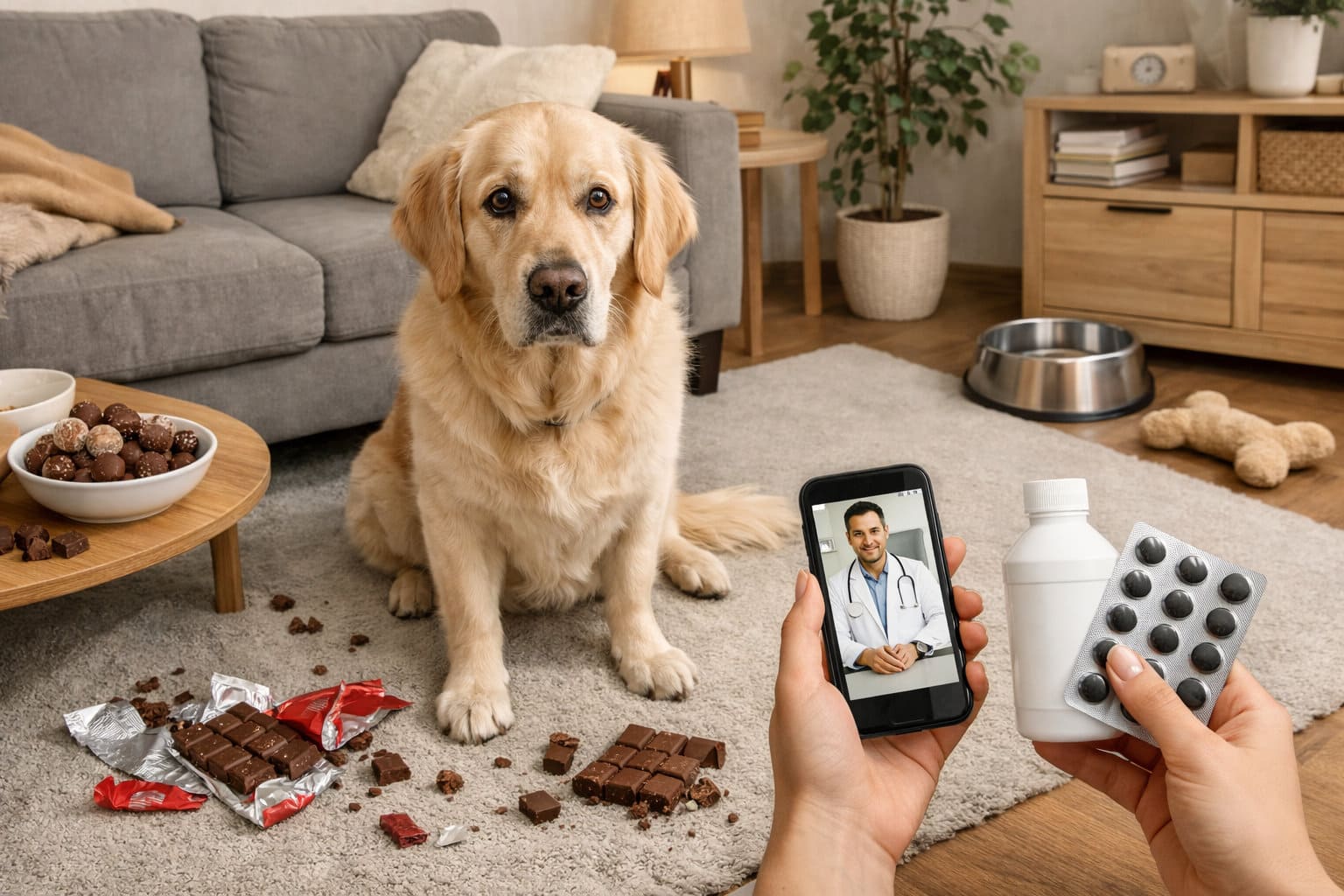
When a dog eats chocolate, it should always be treated as a potentially serious situation. Chocolate contains substances that are toxic to dogs, and even small amounts can cause harmful effects depending on the dog’s size and the type of chocolate consumed. Many dog owners underestimate the risk, assuming a small treat will not cause harm.
Dogs metabolize chocolate very differently than humans. What is safe for people can be dangerous or even fatal for pets. Symptoms may appear quickly or develop over several hours, which often leads owners to delay seeking help.
In Queens, veterinary clinics frequently handle chocolate toxicity cases, especially around holidays. Early action can make a critical difference in outcomes.
“Chocolate toxicity is one of the most preventable veterinary emergencies.”
Why Chocolate Is Toxic to Dogs
Chocolate contains theobromine and caffeine, both of which stimulate the nervous system and heart. Dogs process these compounds very slowly, allowing them to build up to dangerous levels in the body.
Different types of chocolate contain different amounts of theobromine. Dark chocolate and baking chocolate are far more dangerous than milk chocolate, even in small quantities.
The toxicity does not always correlate with visible symptoms right away. A dog may seem normal initially while harmful effects are already developing internally.
Understanding the mechanism of toxicity highlights why immediate veterinary guidance is essential.
How Much Chocolate Is Dangerous for a Dog
The amount of chocolate that causes toxicity depends on the dog’s weight and the type of chocolate ingested. Smaller dogs are at much higher risk even with small amounts.
Baking chocolate and cocoa powder are the most dangerous forms. Milk chocolate is less concentrated but can still be harmful if consumed in sufficient quantity.
Because exact toxicity thresholds vary, it is never safe to “wait and see.” Veterinary professionals calculate risk based on precise information.
Any chocolate ingestion should prompt a call to a veterinarian.
Unnumbered list:
- Dog’s weight and size
- Type of chocolate consumed
- Time since ingestion
Early Signs of Chocolate Poisoning
Early symptoms of chocolate toxicity often involve the gastrointestinal system. Vomiting, diarrhea, and excessive drooling are common initial signs.
Dogs may also become restless or unusually energetic. Increased thirst and panting can occur as the body reacts to stimulants.
Some dogs show subtle behavioral changes before more serious symptoms develop. Owners may notice pacing or difficulty settling down.
Recognizing early signs allows for faster intervention and reduces the risk of complications.
Advanced Symptoms That Require Immediate Care
As toxicity progresses, symptoms become more severe. Tremors, muscle rigidity, and seizures may develop if treatment is delayed.
Heart rhythm abnormalities are a serious concern. Rapid or irregular heartbeat can lead to collapse or cardiac failure.
In severe cases, chocolate poisoning can be fatal. These situations require emergency veterinary treatment and monitoring.
“Severe symptoms indicate that toxins have reached dangerous levels.”
Why Waiting at Home Can Be Dangerous
Many owners hesitate to seek care because the dog appears fine initially. Unfortunately, this delay can allow toxins to be absorbed fully into the bloodstream.
Inducing vomiting at home without guidance can be risky and is not always safe. Improper methods may cause aspiration or injury.
Once symptoms progress, treatment becomes more complex and recovery more uncertain. Early veterinary intervention is always safer.
Veterinary professionals use controlled methods to reduce toxin absorption safely.
Numbered list:
- Do not wait for symptoms to appear
- Avoid home remedies without guidance
- Contact a veterinarian immediately
What to Do Immediately After Chocolate Ingestion
The first step is to contact a veterinary clinic or emergency service as soon as possible. Provide clear information about the type and amount of chocolate eaten and the time of ingestion.
Do not give food, treats, or medications unless instructed by a veterinarian. Certain substances can worsen absorption.
If directed by a veterinary professional, prompt action may prevent toxins from entering the bloodstream.
Calm, accurate communication helps veterinarians determine the best course of action quickly.

Veterinary Diagnosis and Risk Assessment
At the clinic, veterinarians assess risk based on the dog’s weight, chocolate type, and time elapsed. This assessment guides treatment decisions.
Physical examination focuses on heart rate, neurological status, and gastrointestinal signs. Blood work may be performed in moderate to severe cases.
Accurate assessment helps avoid unnecessary treatment while ensuring high-risk dogs receive immediate care.
Queens veterinary clinics emphasize rapid evaluation in chocolate ingestion cases.
Treatment Options for Chocolate Toxicity
Treatment depends on how recently the chocolate was consumed and the severity of symptoms. Inducing vomiting under medical supervision is often the first step.
Activated charcoal may be administered to limit further absorption. Intravenous fluids help support circulation and speed toxin elimination.
Dogs with neurological or cardiac symptoms may require hospitalization and continuous monitoring.
Early treatment significantly improves prognosis.
Monitoring and Recovery After Chocolate Exposure
Recovery time varies depending on exposure level and treatment speed. Mild cases may recover within 24 hours, while severe cases require longer monitoring.
Owners should observe dogs closely after discharge for recurring symptoms. Activity restriction is often recommended during recovery.
Follow-up veterinary visits may be necessary to ensure full resolution and prevent complications.
Consistency and communication are key during the recovery period.
Unnumbered list:
- Monitor heart rate and behavior
- Restrict activity as advised
- Follow all veterinary instructions
Preventing Chocolate Exposure in the Future
Prevention is the most effective approach to chocolate toxicity. Chocolate should always be stored securely and out of reach.
Guests and children should be informed that chocolate is dangerous for dogs. Accidental exposure often occurs during holidays or celebrations.
Training dogs to avoid counter-surfing and unattended food also reduces risk.
Preventive awareness protects dogs from unnecessary emergencies.
Scheduling a Veterinary Appointment and Next Steps
If your dog has eaten chocolate, scheduling a veterinary appointment or emergency visit immediately is critical. Time plays a major role in treatment success.
During the visit, the veterinarian will explain treatment steps, monitoring needs, and recovery expectations. The price of care depends on severity and required treatment, which is why individual assessment is essential.
Pet owners are encouraged to schedule care immediately rather than waiting for symptoms to appear. Early action is safer and often less costly.
Your dog’s safety and health depend on fast decisions and professional veterinary care.