


Foods That Are Toxic to Dogs – Dangerous Ingredients Every Pet Owner in Queens NY Should Avoid
- Why Certain Human Foods Are Dangerous for Dogs
- Chocolate and Cocoa Products
- Grapes and Raisins
- Onions, Garlic, and Allium Vegetables
- Xylitol and Sugar-Free Products
- Alcohol and Caffeinated Beverages
- Fatty Foods and Cooked Bones
- Macadamia Nuts and Other Nuts
- Raw Dough and Yeast
- Avocado and Certain Fruits
- What To Do If Your Dog Eats Something Toxic
- Preventing Food Toxicity in Dogs
Why Certain Human Foods Are Dangerous for Dogs
Many dog owners in Queens, NY enjoy sharing food with their pets, especially during family dinners, holidays, or backyard gatherings. However, what seems harmless to humans can be highly toxic to dogs. Canine metabolism differs significantly from ours, and certain foods can trigger organ failure, neurological damage, or life-threatening complications.
Dogs lack the ability to properly process specific compounds found in common household foods. Even small quantities can cause severe reactions depending on the dog’s size, breed, and health status. Urban households often contain a wide variety of accessible foods, increasing accidental ingestion risk.
Food toxicity cases are among the most common emergency visits in veterinary clinics. Many incidents occur when food is left unattended on countertops, coffee tables, or within reach during celebrations.
“Just because a food is safe for you does not mean it is safe for your dog.”
Understanding which foods are toxic to dogs helps prevent emergencies and reduces the need for urgent veterinary treatment.
Chocolate and Cocoa Products
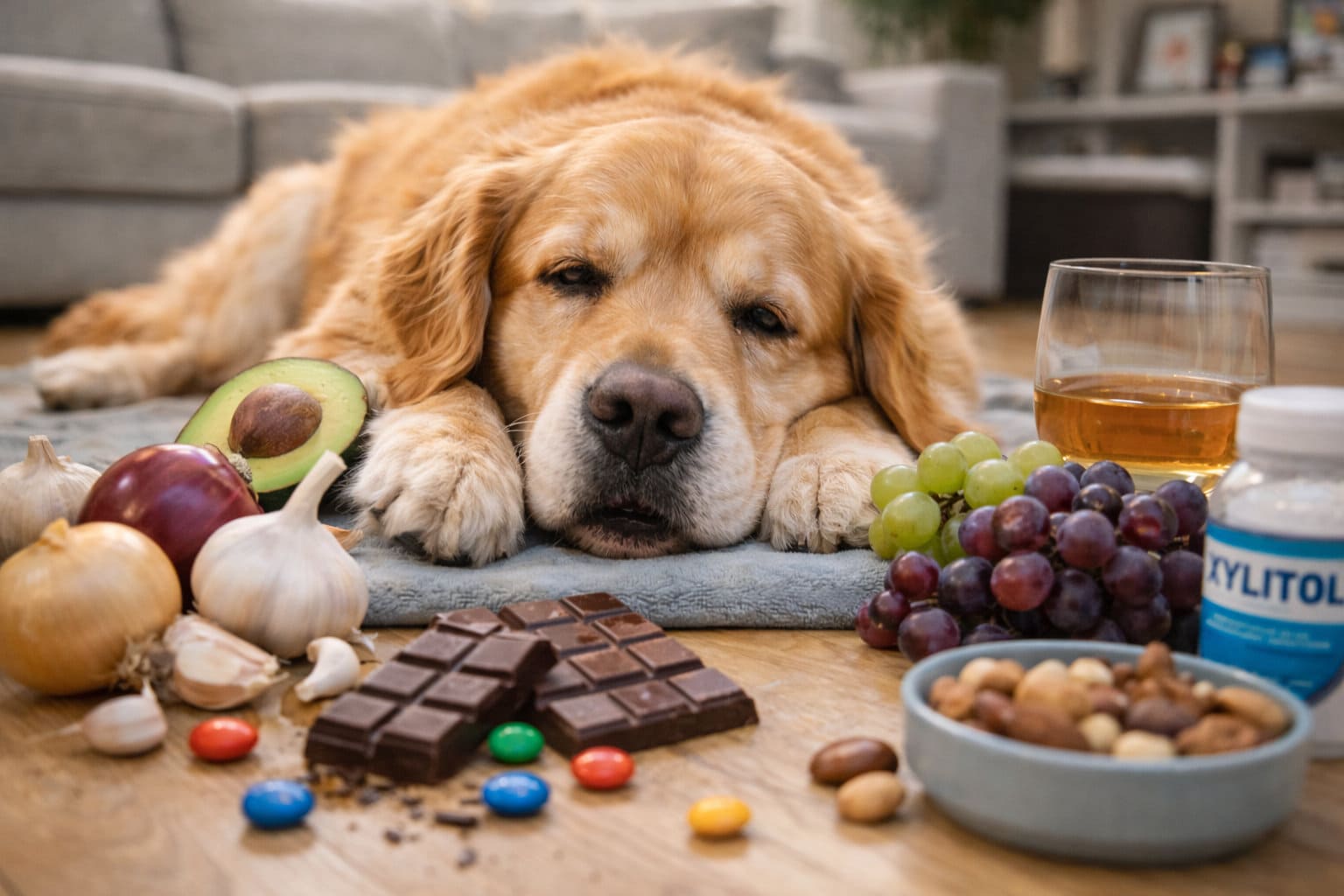
Chocolate toxicity is one of the most well-known food-related emergencies in dogs. Chocolate contains theobromine and caffeine, both of which stimulate the nervous system and heart.
Dark chocolate and baking chocolate contain the highest concentrations of theobromine, making them particularly dangerous. Even small amounts can cause symptoms in small dogs.
Signs of chocolate poisoning include:
- Vomiting and diarrhea
- Rapid heart rate
- Tremors
- Restlessness
- Seizures
Symptoms may appear within a few hours but can worsen rapidly. Severe cases may require hospitalization, IV fluids, and cardiac monitoring at an emergency veterinary clinic in Queens.
Holiday seasons, especially Halloween and Christmas, see a spike in chocolate ingestion cases.
Grapes and Raisins
Grapes and raisins are extremely toxic to dogs and can cause acute kidney failure. The exact toxic compound remains unclear, but even small amounts can trigger severe reactions.
Not all dogs respond the same way, which makes this food particularly dangerous. Some dogs may develop kidney injury after ingesting only a few grapes.
Warning signs include:
- Vomiting
- Lethargy
- Decreased appetite
- Increased thirst
- Reduced urination
Kidney damage may not be immediately apparent. Blood tests are often necessary to evaluate kidney function after suspected ingestion.
Immediate veterinary intervention dramatically improves prognosis.
Onions, Garlic, and Allium Vegetables
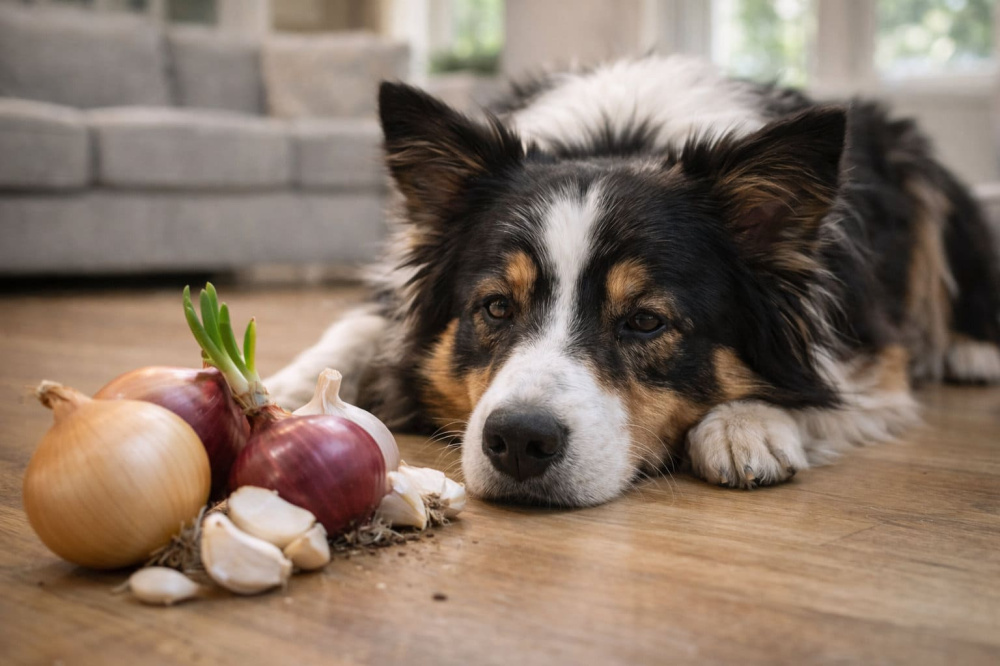
Onions, garlic, leeks, and chives contain compounds that damage red blood cells in dogs. This can lead to hemolytic anemia, a condition where the body destroys its own red blood cells.
Toxicity can occur with raw, cooked, powdered, or dehydrated forms. Many processed foods contain onion or garlic powder, which increases accidental exposure.
Symptoms may include:
- Weakness
- Pale gums
- Rapid breathing
- Dark-colored urine
Damage may develop gradually over several days. Early evaluation and blood testing at a veterinary clinic in Queens are critical if ingestion is suspected.
Avoid feeding table scraps that may contain hidden seasonings.
Xylitol and Sugar-Free Products
Xylitol is an artificial sweetener found in sugar-free gum, candy, peanut butter, baked goods, and even some medications. It is extremely dangerous to dogs.
Unlike humans, dogs experience a rapid insulin release when ingesting xylitol. This causes a sudden drop in blood sugar, which can lead to seizures and collapse within minutes.
Emergency signs include:
- Vomiting
- Weakness
- Tremors
- Seizures
- Loss of coordination
In severe cases, xylitol can also cause acute liver failure.
Xylitol poisoning is one of the fastest-acting food toxicities in dogs.
Immediate emergency veterinary care is required. Do not delay treatment even if symptoms seem mild.
Alcohol and Caffeinated Beverages
Alcohol affects dogs much more severely than humans. Even small quantities can cause central nervous system depression, vomiting, disorientation, and breathing difficulties.
Caffeinated drinks such as coffee, energy drinks, and tea contain methylxanthines similar to chocolate, which overstimulate the heart and nervous system.
Signs of toxicity may include:
- Excessive panting
- Rapid heart rate
- Vomiting
- Tremors
- Collapse
Pets may access alcoholic beverages left unattended during social gatherings. In Queens apartments where space is limited, pets can easily reach countertops or tables.
Prompt veterinary evaluation helps prevent complications such as respiratory failure.
Fatty Foods and Cooked Bones
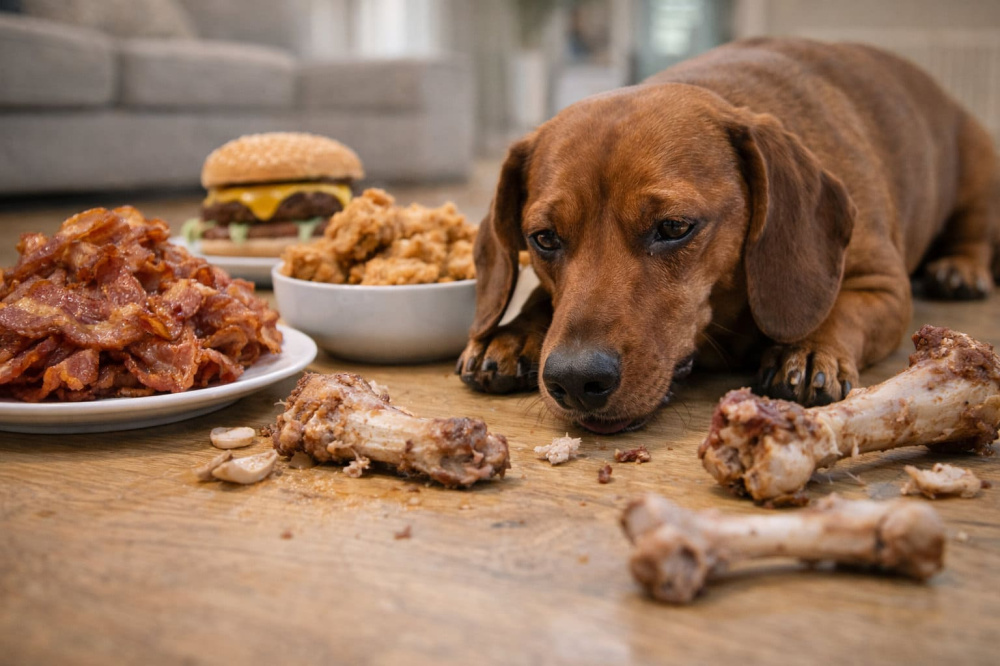
High-fat foods like bacon, fried foods, and rich table scraps can trigger pancreatitis, a painful inflammatory condition of the pancreas.
Pancreatitis symptoms often include:
- Severe abdominal pain
- Vomiting
- Lethargy
- Refusal to eat
Cooked bones present additional risk. They can splinter and cause intestinal obstruction or perforation.
Emergency treatment may involve IV fluids, pain management, blood tests, and imaging.
Preventing access to fatty leftovers significantly reduces emergency visits.
Macadamia Nuts and Other Nuts
Macadamia nuts are toxic to dogs and can cause neurological symptoms including weakness, tremors, and difficulty walking.
While the exact mechanism is not fully understood, symptoms typically develop within 12 hours of ingestion.
Common signs include:
- Hind limb weakness
- Vomiting
- Tremors
- Fever
Other nuts, while not always toxic, are high in fat and may contribute to pancreatitis.
Keep snack containers securely stored and avoid offering nut-based treats.
Raw Dough and Yeast
Unbaked bread dough containing yeast can expand in a dog’s stomach, causing painful distension and potential gastric torsion.
Additionally, yeast fermentation produces alcohol, which can lead to alcohol poisoning.
Symptoms may include:
- Abdominal swelling
- Restlessness
- Vomiting
- Disorientation
This is a surgical emergency in severe cases. Immediate veterinary care is required.
Store baking ingredients securely, especially during holiday cooking.
Avocado and Certain Fruits
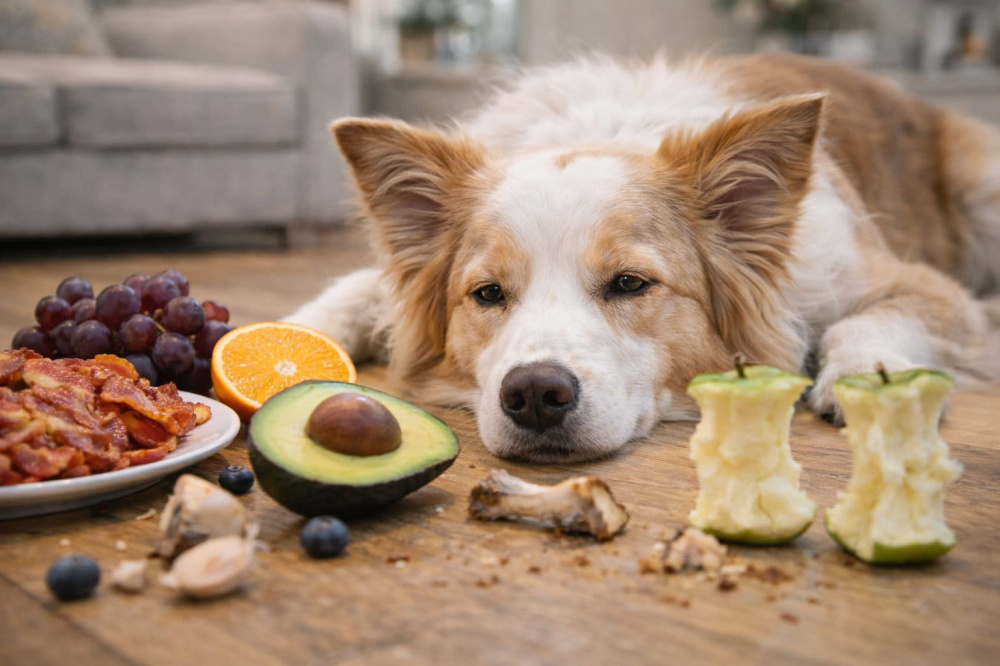
Avocado contains persin, which can cause gastrointestinal upset in dogs. While small amounts of the flesh are less toxic than the pit or skin, ingestion can still cause vomiting or diarrhea.
Fruit pits from peaches, cherries, and plums present choking hazards and may contain cyanogenic compounds.
Watch for:
- Choking
- Abdominal pain
- Vomiting
- Lethargy
Prompt evaluation is necessary if your dog swallows fruit pits or large portions of avocado.
What To Do If Your Dog Eats Something Toxic
If you suspect your dog has eaten a toxic food, act immediately. Do not wait for symptoms to appear.
Steps to take:
- Remove remaining food from reach
- Identify what and how much was consumed
- Contact a veterinary clinic in Queens immediately
- Do not induce vomiting unless instructed
Bring packaging or ingredient lists if possible. Early treatment may involve inducing vomiting, activated charcoal, IV fluids, or hospitalization.
“Fast action dramatically improves survival in food toxicity cases.”
Delaying care increases risk of organ damage and higher treatment complexity.
Preventing Food Toxicity in Dogs
Prevention begins with education and vigilance. Keep all potentially toxic foods out of reach. Inform family members and guests not to feed table scraps without veterinary approval.
Simple preventive measures include:
- Securing trash bins
- Storing food in sealed containers
- Reading ingredient labels carefully
- Supervising pets during gatherings
Routine veterinary visits also provide opportunities to discuss dietary safety and proper nutrition.
If your dog has ingested a toxic food or you are concerned about symptoms, contact our veterinary clinic in Queens NY immediately to schedule an emergency appointment. Early evaluation protects organ function, reduces complications, and ensures your dog receives prompt, professional care.