


Male Cat Urinary Blockage – Symptoms, Emergency Treatment and Prevention in Queens NY
- What Male Cat Urinary Blockage Means and Why It Is an Emergency
- Why Male Cats Are More Susceptible Than Females
- Common Causes of Urinary Blockage in Male Cats
- Early Signs and Warning Symptoms to Watch For
- What Happens If Urinary Blockage Is Left Untreated
- Emergency Veterinary Treatment in Queens NY
- Hospitalization and Recovery Process
- Surgical Options for Recurrent Blockages
- Preventing Urinary Blockage in Male Cats
- Long Term Management and Monitoring
- When to Seek Immediate Veterinary Care
What Male Cat Urinary Blockage Means and Why It Is an Emergency
Male cat urinary blockage is one of the most serious emergencies in feline medicine. It occurs when the urethra — the narrow tube that carries urine from the bladder to the outside — becomes partially or completely obstructed. Because male cats have a much narrower urethra than females, they are significantly more prone to life-threatening blockages.
When urine cannot pass, toxins that are normally eliminated through urination begin to accumulate in the bloodstream. Potassium levels can rise dangerously, leading to heart rhythm disturbances. Within 24 to 48 hours, a complete urinary obstruction can become fatal if not treated promptly.
In Queens, NY, we see urinary blockages frequently in both indoor and outdoor male cats. Stress, diet, dehydration, and underlying urinary tract inflammation all contribute to the condition. Urban living, multi-cat households, and environmental stressors can increase risk.
“Urinary blockage in male cats is not simply difficulty urinating — it is a medical emergency that requires immediate veterinary intervention.”
If you suspect your cat is straining to urinate or visiting the litter box repeatedly without producing urine, contact an emergency veterinary clinic in Queens immediately.

Why Male Cats Are More Susceptible Than Females
Anatomy plays the primary role. Male cats have a long, narrow, and curved urethra. Even small amounts of inflammatory debris, mucus, crystals, or mineral plugs can obstruct urine flow. Female cats, with their shorter and wider urethras, rarely experience complete blockages.
Neutered male cats may have a slightly narrower urethra due to developmental factors, although neutering itself does not directly cause blockage. What contributes more significantly is lifestyle — indoor living, reduced activity, and lower water intake.
Risk factors include:
- Dry food–only diets
- Obesity
- Chronic stress
- Low water consumption
- History of feline lower urinary tract disease
Queens apartment living can limit hydration opportunities and increase stress triggers such as noise, construction, or territorial tension in multi-cat homes.
Understanding anatomical vulnerability helps cat owners recognize why early symptoms must never be ignored.
Common Causes of Urinary Blockage in Male Cats
The most frequent underlying cause is Feline Lower Urinary Tract Disease, often abbreviated as FLUTD. This condition includes bladder inflammation, crystal formation, and urethral plugs composed of inflammatory debris and minerals.
Crystals such as struvite or calcium oxalate can accumulate in the bladder and contribute to obstruction. Stress-related cystitis is another common trigger, especially in indoor cats exposed to environmental changes.
Typical causes include:
- Urethral plugs made of inflammatory material
- Bladder stones
- Severe bladder inflammation
- Crystalline mineral buildup
Diet plays a major role. Inadequate hydration and high mineral concentrations in urine increase the risk of crystal formation. Cats naturally have low thirst drive, making dehydration a frequent contributing factor.
Early diagnosis and preventive care can significantly reduce recurrence rates.
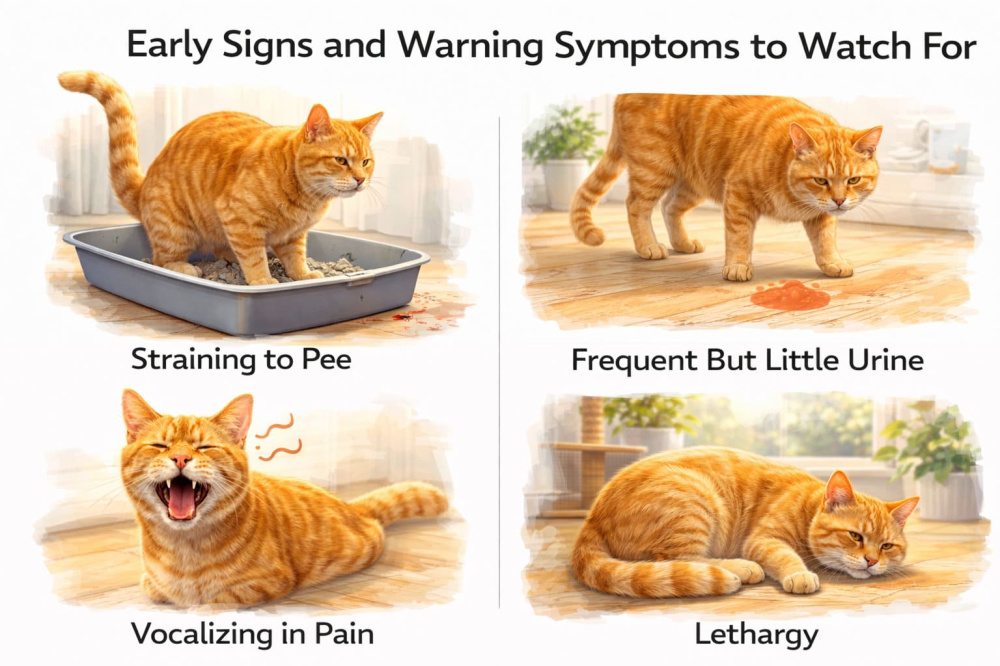
Early Signs and Warning Symptoms to Watch For
Recognizing early symptoms can save your cat’s life. Many owners mistake urinary blockage for constipation because cats strain in the litter box.
Common early signs include frequent litter box visits, straining to urinate, crying while attempting to urinate, and producing only small droplets of urine. You may also notice blood in the urine or urine outside the litter box.
Advanced symptoms may include:
- Lethargy
- Vomiting
- Loss of appetite
- Hiding behavior
- Abdominal pain
As toxins build up in the bloodstream, cats can become weak and unresponsive. Their heart rhythm may become abnormal due to elevated potassium levels.
If your male cat is repeatedly entering the litter box without producing urine, this is an emergency.
Immediate evaluation at a veterinary clinic in Queens is essential.
What Happens If Urinary Blockage Is Left Untreated
A complete urinary obstruction prevents waste elimination. Within 24 hours, kidney function begins to deteriorate. Electrolyte imbalances, particularly hyperkalemia, can disrupt normal heart function.
Untreated blockage can lead to:
- Acute kidney failure
- Bladder rupture
- Severe dehydration
- Cardiac arrhythmias
- Death
The bladder becomes painfully distended. Pressure builds, and toxins accumulate rapidly. Cats may collapse suddenly once potassium levels reach critical thresholds.
“Time is the most important factor in survival. Delaying care dramatically increases risk.”
Prompt veterinary intervention improves prognosis and reduces complications.
Emergency Veterinary Treatment in Queens NY
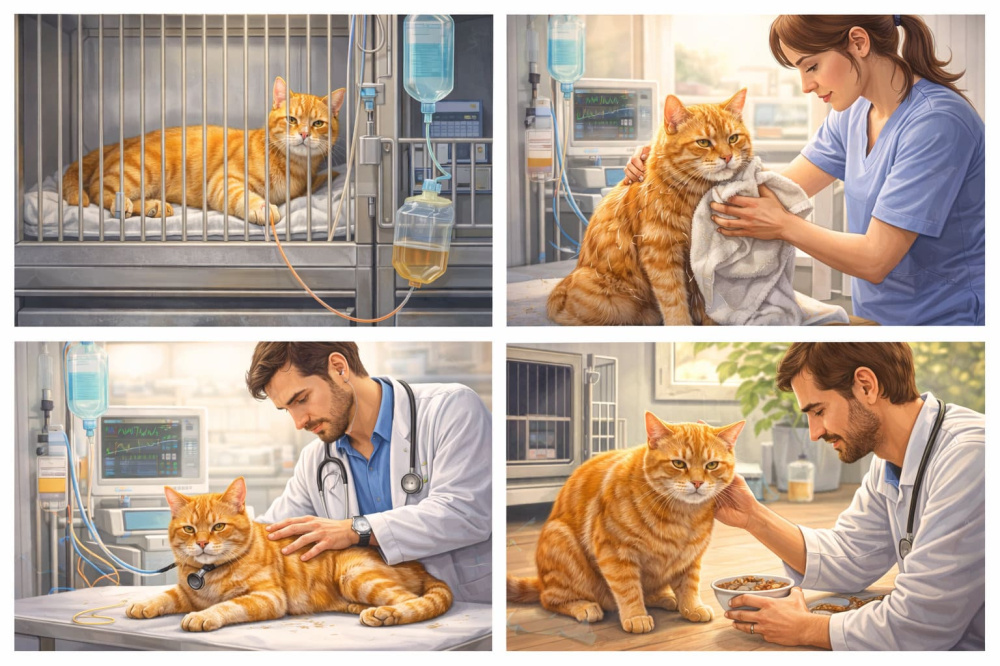
Treatment begins with stabilization. Blood tests assess kidney function and electrolyte levels. If potassium levels are dangerously high, medications are administered immediately to protect the heart.
The primary goal is to relieve the obstruction. This is typically achieved by carefully placing a urinary catheter under sedation or anesthesia. The catheter flushes debris and restores urine flow.
Emergency treatment usually includes:
- IV fluids to correct dehydration and flush toxins
- Electrolyte correction
- Pain management
- Hospitalization and monitoring
Most cats require 24–72 hours of hospitalization. Continuous monitoring ensures urine output remains stable and kidney function improves.
If you are concerned about treatment options, recovery, or overall price, our veterinary team in Queens can provide guidance and help you schedule urgent care.
Hospitalization and Recovery Process
After catheter placement, the bladder is flushed repeatedly to remove debris. IV fluids support kidney function and help normalize electrolyte levels.
During hospitalization, veterinarians monitor urine production, appetite, heart rhythm, and blood parameters. Cats often remain hospitalized until they can urinate independently after catheter removal.
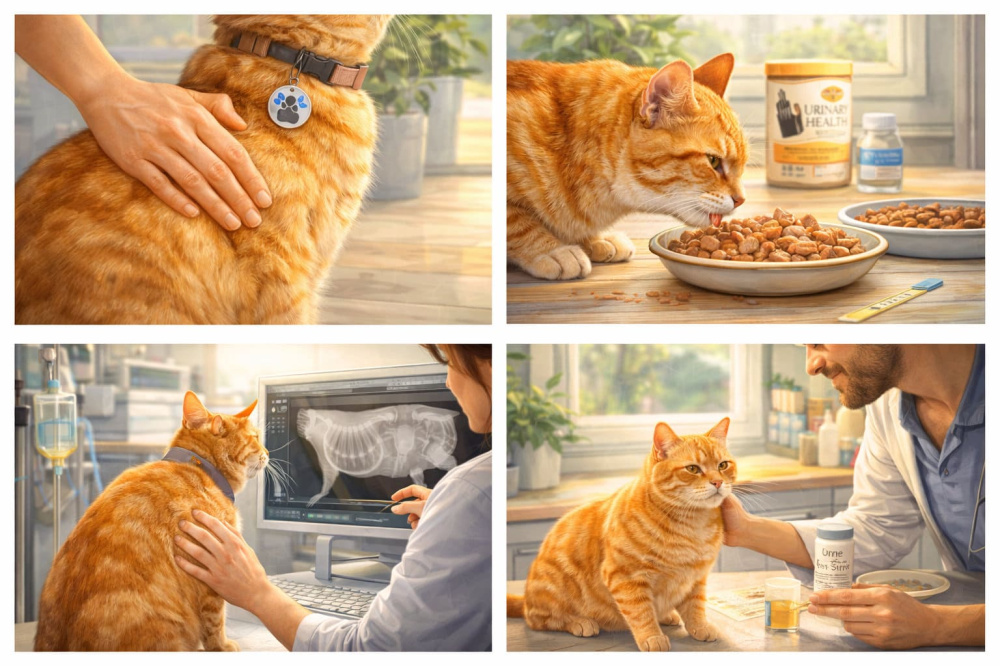
Recovery may include prescription urinary diets and environmental stress reduction strategies. Some cats require long-term dietary management to prevent recurrence.
Follow-up visits are critical to evaluate kidney function and ensure complete resolution.
Surgical Options for Recurrent Blockages
Some male cats experience repeated urinary blockages despite medical management. In these cases, a surgical procedure called perineal urethrostomy may be recommended.
This surgery creates a wider urethral opening, significantly reducing the risk of future obstruction. While surgery does not cure underlying bladder inflammation, it prevents life-threatening blockages.
Surgical intervention is typically considered when:
- A cat has multiple blockages
- Medical management fails
- Severe urethral narrowing persists
Perineal urethrostomy requires specialized postoperative care, but for many cats, it dramatically improves long-term prognosis.
Discussing surgical options with your Queens veterinarian helps determine whether this approach is appropriate.
Preventing Urinary Blockage in Male Cats
Prevention focuses on hydration, diet, and stress management. Encouraging water intake is essential. Many veterinarians recommend wet food diets to increase moisture consumption.
Preventive strategies include:
- Feeding prescription urinary diets if recommended
- Providing multiple water sources
- Using water fountains to stimulate drinking
- Maintaining healthy body weight
Environmental enrichment reduces stress-related cystitis. Litter box hygiene is equally important — one litter box per cat plus one extra is the standard recommendation.
Preventive care visits allow monitoring of urine concentration and early detection of crystal formation.
Long Term Management and Monitoring
Cats that experience one urinary blockage are at increased risk of recurrence. Ongoing monitoring is crucial.
Your veterinarian may recommend periodic urinalysis, blood work, and diet reassessment. Monitoring for subtle behavioral changes such as increased litter box visits can allow early intervention before complete obstruction develops.
Lifestyle modifications play a key role. Reducing environmental stress in Queens apartment living, maintaining hydration, and following veterinary dietary guidance significantly lower recurrence risk.
Early intervention reduces emergency visits and overall treatment cost over time.
When to Seek Immediate Veterinary Care
If your male cat is straining without producing urine, crying in the litter box, vomiting, or appearing lethargic, do not wait. These are emergency signs.
Seek urgent veterinary attention in Queens if you observe:
- Repeated unsuccessful attempts to urinate
- Sudden collapse
- Distended painful abdomen
- Severe lethargy
Even if symptoms seem mild, obstruction can worsen quickly. Emergency evaluation and treatment save lives.
If you suspect urinary blockage or want to discuss preventive care, you can contact our veterinary clinic in Queens NY to schedule an appointment. Prompt action protects kidney function, prevents complications, and ensures your cat receives the highest standard of emergency and preventive care.